How Many Square Feet Does a Gallon of Paint Cover?
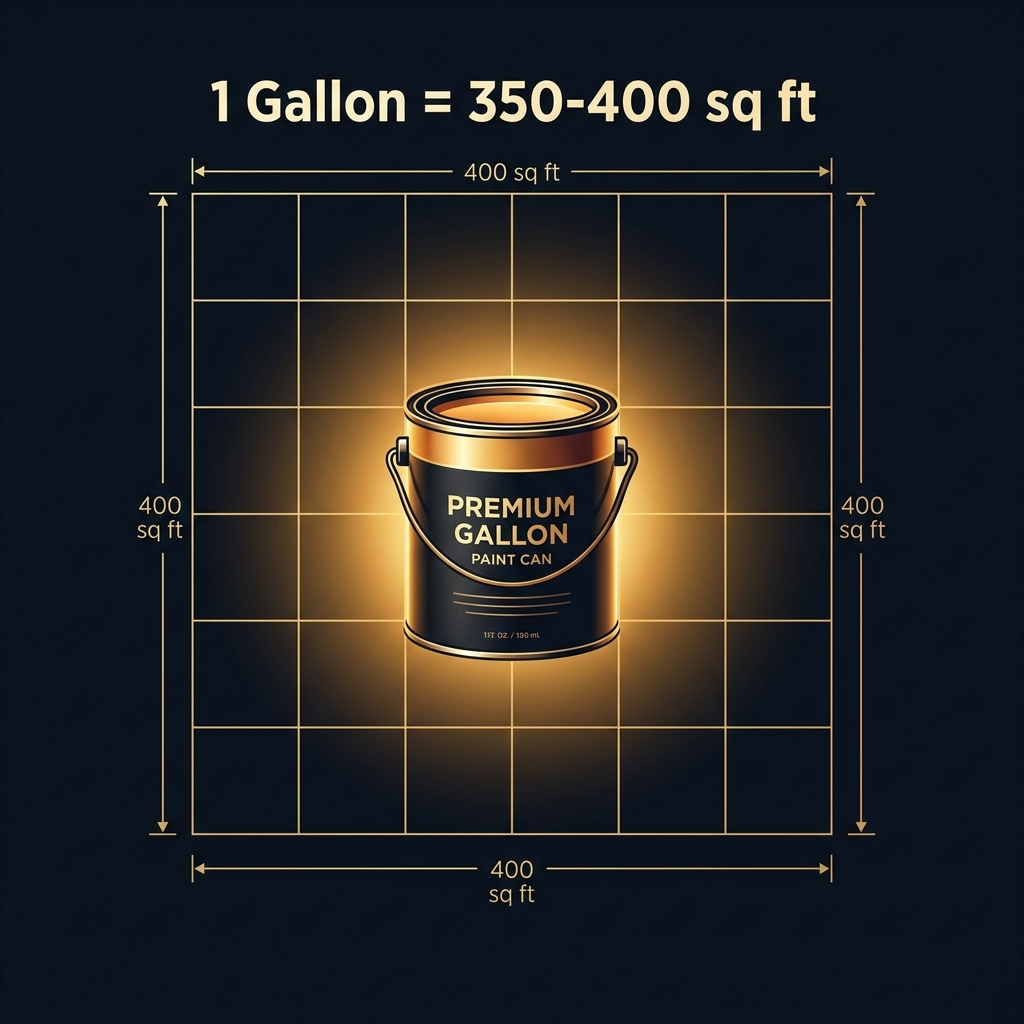
Figure 1: Standard interior wall paint covers between 350 and 400 square feet per gallon on smooth, primed surfaces.
Estimating how much paint to purchase is one of the most vital preliminary steps in any residential or commercial interior renovation. Whether you are redecorating a cozy bedroom, painting an expansive living room ceiling, or updating commercial office spaces, purchasing the wrong amount of paint leads to wasted money, mid-project store runs, or mismatched batch colors. As a general rule of thumb, one standard gallon of quality interior paint covers between 350 and 400 square feet for one single coat on smooth, sealed drywall surfaces. However, real-world paint application rarely matches ideal lab conditions, which is why professionals always budget for surface texture, absorption rates, finish sheens, and application tools before stepping into the paint store.
When planning an interior painting project, understanding surface geometry is essential. Just as homeowners need to calculate the square footage of floors or ceilings before ordering materials, calculating your net paintable wall surface ensures accurate gallon purchasing. Throughout my two decades managing architectural finishing projects, I have seen DIY painters buy double what they need or end up stuck with half-painted accent walls at 9:00 PM. In this comprehensive, field-tested guide, we will break down every single variable that dictates paint coverage per gallon, examine room-by-room formulas, provide exact square footage coverage tables, and arm you with practical calculation tools to guarantee flawless execution every single time.
Typical Paint Coverage per Gallon
The standard baseline benchmark established by leading paint manufacturers—including Sherwin-Williams, Benjamin Moore, Behr, and PPG—is 350 to 400 square feet per gallon. This standard applies primarily to smooth, non-porous interior drywall coated with standard latex acrylic topcoat paint applied at a uniform wet film thickness (WFT) of approximately 4.0 mils, which dries to a solid dry film thickness (DFT) of 1.5 to 2.0 mils. However, this coverage number represents a single coat. Because almost all professional paint applications demand two full coats for uniform color saturation, durability, and hide, real-world room coverage effectively drops to 175 to 200 square feet of wall space per gallon.
Coverage for One Coat
When applying a single coat of paint over an already painted, smooth, clean surface of a similar shade, one gallon yields approximately 350 to 400 square feet of finished area. For instance, if you have an accent wall measuring 10 feet high by 35 feet long (350 square feet), one gallon will comfortably provide full single-coat coverage with a small amount of liquid remaining in the can for minor touch-ups. Single-coat coverage is generally sufficient only when refreshing an existing color coat with identical high-quality paint, touch-up repainting, or applying specialized "paint-and-primer-in-one" products over light, clean existing coats.
Coverage for Two Coats
In standard architectural painting practices, two coats are universally recommended to achieve optimal washability, color accuracy, and sheen consistency. When accounting for two complete coats, one gallon of paint covers 175 to 200 square feet of surface area. If your room features 400 square feet of total net wall space, you will require exactly two gallons of paint to complete the standard two-coat coverage protocol. Applying two thinner, even coats is far superior to trying to force a thick single coat, which often results in unsightly roller stipple, sagging runs, uneven drying, and reduced long-term durability against scuffs and scrubbing.
Why Actual Coverage Varies
It is important to emphasize that manufacturer coverage numbers printed on paint cans assume near-perfect application metrics: a smooth, primed, non-absorbent surface, professional roller technique, and zero spillage or equipment loss. In actual field conditions, coverage varies significantly based on five foundational pillars: wall porosity, surface texture profile, color shift intensity, equipment transfer efficiency, and environmental temperature or humidity. Understanding these variables allows you to adjust your purchasing calculations accurately rather than relying blindly on theoretical averages.
Factors That Affect Paint Coverage
No two walls behave identically when absorbing liquid paint. To prevent running out of paint midway through a project, painters must analyze several key physical and chemical characteristics of both the paint substrate and the coating material itself.
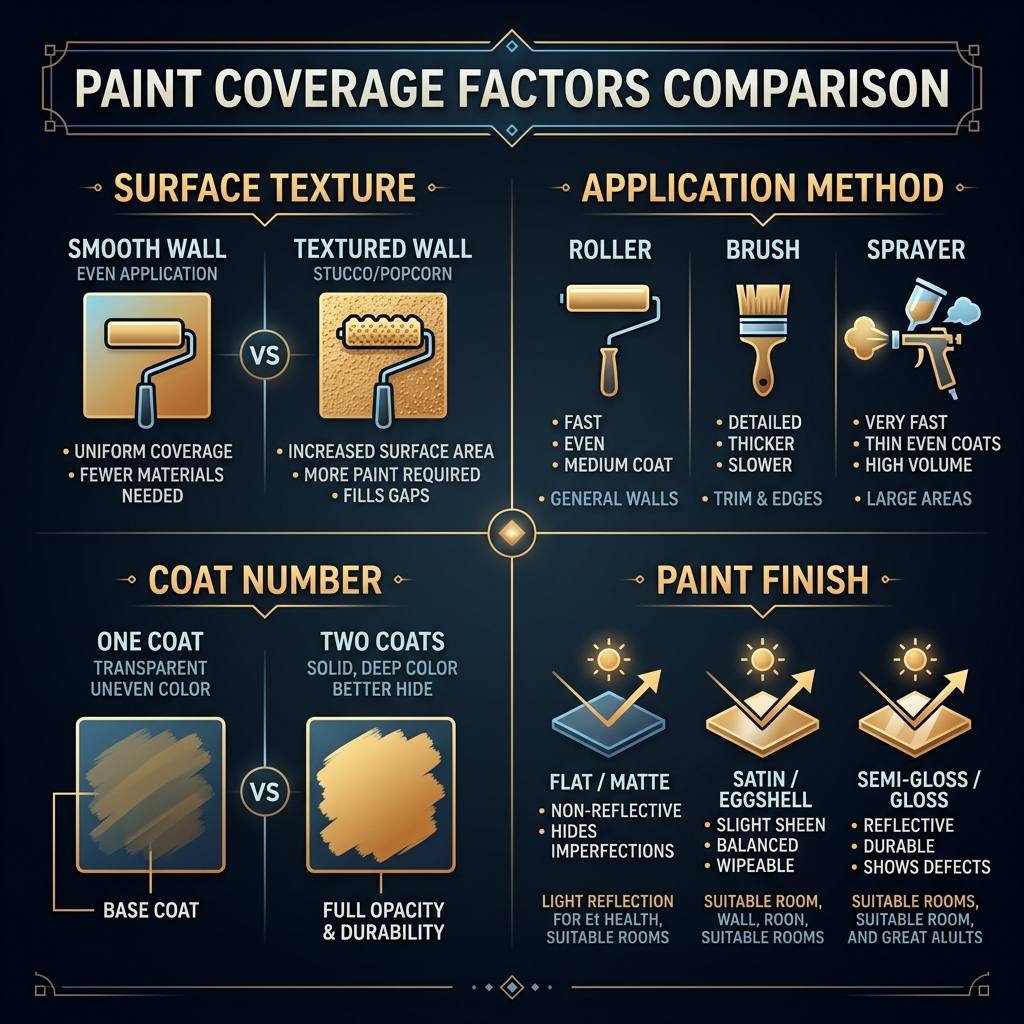
Figure 2: Surface texture, application tools, paint sheen, and coat count dramatically alter real-world paint gallon yield.
Type and Quality of Paint
Paint formulation directly impacts fluid volume solids and hiding strength. Premium paints contain a higher percentage of titanium dioxide pigment and quality acrylic resins relative to water and volatile solvents. Higher volume solids (typically 38% to 45% in top-tier paints versus 25% to 30% in budget paints) produce a thicker, more durable dry film layer per gallon. While budget paints cost less per gallon upfront, their low solids content requires three or more coats to match the hide of two coats of premium paint, ultimately increasing total material and labor expenses.
Paint Finish
Paint sheens range from flat/matte to high-gloss, and each finish interacts differently with wall surfaces:
- Flat / Matte: Highly porous pigments that absorb into surfaces readily. High hiding power over imperfections, but yields around 350 sq ft/gal due to micro-porosity.
- Eggshell & Satin: Smooth, balanced light reflection. Standard choice for living areas and hallways, offering consistent 350 to 400 sq ft/gal coverage on primed walls.
- Semi-Gloss & High-Gloss: Formulated with dense, non-porous resin structures. High gloss flows smoothly over surfaces, achieving up to 400 sq ft/gal, though substrate defects must be perfectly patched beforehand.
Surface Condition
Unprimed, raw drywall acts like a dry sponge, aggressively sucking in liquid binder and solvent. Painting directly onto unsealed drywall or bare wood can diminish coverage to a low 200 to 250 square feet per gallon on the initial coat. Applying a dedicated, low-cost PVA (polyvinyl acetate) drywall primer seals these micro-pores first, ensuring your expensive topcoat paint spreads evenly at its full 400 square feet per gallon potential.
Textured vs. Smooth Walls
Surface geometry plays a huge mathematical role in paint consumption. Textured walls—such as orange peel, knockdown, popcorn ceilings, heavy trowel plaster, or exterior stucco—contain peaks and valleys that significantly increase the physical surface area beyond basic two-dimensional dimensions. A textured wall measuring 10x10 feet (100 nominal square feet) may actually possess 130 to 150 square feet of true 3D surface area. Consequently, gallon coverage on heavy textured surfaces plummets to 200–250 square feet per gallon.
Paint Color and Color Changes
Color science plays a major role in coverage efficiency. Shifting from a dark hue (such as navy blue, deep crimson, or forest green) to a bright white or light beige requires significantly more pigment coverage. Standard white topcoats applied over dark red often require three to four coats for total opacity unless a gray-tinted primer is applied first. Conversely, deep organic yellow and red paints naturally possess lower hiding opacity due to organic dye characteristics and may demand specialized tinted base coats.
Application Method
The tool selected to apply paint alters material transfer efficiency and film thickness:
- Roller Cover Nap Depth: Standard 3/8-inch nap rollers deposit an even film on smooth walls. Thick 3/4-inch or 1-inch nap rollers hold more paint for textured surfaces but absorb and hold significant liquid inside the core sleeve.
- Airless Paint Sprayers: Sprayers offer rapid application speed, but overspray and atomization drift result in 15% to 25% material loss. Budget additional paint volume when spraying outdoors or in ventilated spaces.
- Paint Brushes: Brushes apply thicker coats during cutting-in operations along baseboards and ceiling lines, consuming slightly more paint per square foot than flat roller passes.
Number of Coats
As previously established, every additional coat effectively splits your gallon coverage area in half. When planning your project materials, always determine whether your job requires one, two, or three coats before dividing net square footage by your estimated gallon rate. When executing heavy material projects or wall repairs, referencing guides on estimating material waste will help you account for scrap, roller tray retention, and overspray.
How to Calculate How Much Paint You Need
Calculating your paint requirements with precision involves a simple 5-step mathematical process. Following this structured workflow eliminates guesswork and guarantees correct purchasing orders.
1. Measure the Paintable Area
First, measure the perimeter of the room by adding the lengths of all walls together. Then multiply the total perimeter length by the floor-to-ceiling height to calculate the gross wall square footage.
2. Subtract Doors and Windows
Subtract non-paintable wall openings from your gross wall area to obtain the true net paintable surface. Standard industry deduction allowances are:
- Standard Interior Door: Subtract 21 square feet (typically 3 ft × 7 ft).
- Standard Window: Subtract 15 square feet (typically 3 ft × 5 ft).
- Large Double Door / Sliding Glass Door: Subtract 40 to 45 square feet.
Detailed steps on measuring wall perimeters and deducting structural cutouts are detailed in our guide on wall square footage formulas.
3. Divide by the Coverage Rate
Divide your net paintable square footage by the expected coverage rate of your chosen paint (use 350 sq ft/gal for safety or 400 sq ft/gal for smooth primed walls) to determine single-coat gallon requirements.
4. Account for Multiple Coats
Multiply your single-coat gallon result by the total number of coats required (typically 2). Always round up fractional decimal results to the nearest whole gallon (e.g., 1.3 gallons rounds up to 2 gallons or 1 gallon plus 1 quart).
5. Allow for Waste and Touch-Ups
Add a 10% safety cushion to account for roller sleeve absorption, tray residue, wall patching repairs, and future touch-ups over the life of the paint job.
How Much Paint Do You Need for Different Square Footages?
To give you an instant reference point, the table below breaks down single-coat and two-coat paint gallon requirements across standard interior room and residential floor plan sizes.
| Net Surface Area | Single Coat Paint Needed | Two Coats Paint Needed | Recommended Purchase |
|---|---|---|---|
| 100 Sq Ft (Small Bathroom / Accent) | 0.29 Gal (1 Quart) | 0.57 Gal (2 Quarts) | 1 Gallon (or 2 Quarts) |
| 250 Sq Ft (Small Bedroom / Kitchen) | 0.71 Gal (3 Quarts) | 1.43 Gallons | 2 Gallons |
| 500 Sq Ft (Master Bedroom / Living Room) | 1.43 Gallons | 2.86 Gallons | 3 Gallons |
| 1,000 Sq Ft (Large Open Plan / Small Home) | 2.86 Gallons | 5.71 Gallons | 6 Gallons |
| 1,500 Sq Ft (Medium Whole Home Interior) | 4.28 Gallons | 8.57 Gallons | 9 Gallons |
| 2,000 Sq Ft (Large Whole Home Interior) | 5.71 Gallons | 11.43 Gallons | 12 Gallons (3x 5-Gal Pails) |
100 Square Feet
A 100-square-foot wall area corresponds to a powder room or small accent wall (e.g., 10 feet wide by 10 feet high). For one coat, you need less than a third of a gallon (~0.29 gal), making a single 1-quart paint container sufficient. For two coats, 2 quarts (0.5 gallons) will do, though buying 1 full gallon is often more economical than two individual quarts.
250 Square Feet
A 250-square-foot net area represents a standard guest room or kitchen wall setup. Single-coat coverage requires roughly 0.71 gallons. Two-coat protection consumes ~1.43 gallons, requiring you to purchase 2 full gallons of topcoat paint.
500 Square Feet
A 500-square-foot net surface corresponds to a large master bedroom suite or formal living room. One coat requires ~1.43 gallons. For standard two-coat execution, you will need ~2.86 gallons, meaning you should buy 3 separate 1-gallon cans or 1 five-gallon contractor bucket for extra value.
1,000 Square Feet
Covering 1,000 square feet of wall space requires ~2.86 gallons for a single coat and ~5.71 gallons for two coats. Professional painters tackling 1,000+ square feet generally purchase two 5-gallon pails to ensure uniform batch mixing (boxing paint) and lower per-gallon costs.
How Much Paint Do You Need for a 12×12 Room?
Let's work through a practical, real-world example step by step for a standard 12-foot by 12-foot square bedroom with standard 8-foot ceiling heights.
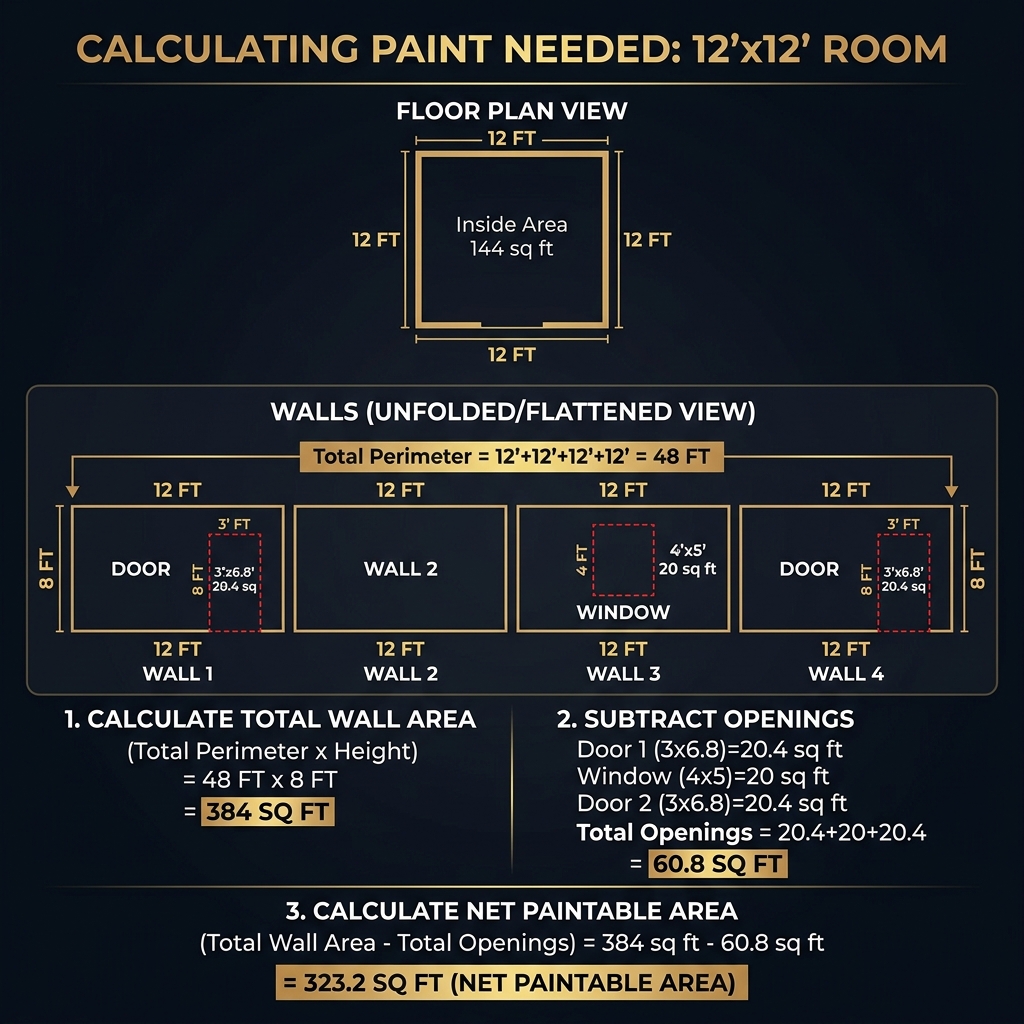
Figure 3: Unfolding the four walls of a 12x12 room reveals 384 gross sq ft, reduced to ~330 net sq ft after door and window deductions.
Calculate the Wall Area
A 12x12 room has four walls, each 12 feet long. The total wall perimeter is 12 + 12 + 12 + 12 = 48 linear feet. Multiplying 48 linear feet by the 8-foot wall height gives a gross wall area of 384 square feet.
Subtract Doors and Windows
Assuming the room has one entry door (21 sq ft) and two standard windows (15 sq ft each, totaling 30 sq ft), total deductions equal 51 square feet. Subtracting 51 from 384 gives a net paintable wall surface of 333 square feet.
Calculate Paint for One Coat
Dividing 333 net square feet by the standard 350 sq ft/gal coverage rate yields 0.95 gallons. Therefore, exactly 1 gallon of paint is sufficient for a single coat in a 12x12 room.
Calculate Paint for Two Coats
For two coats, total coverage area becomes 333 × 2 = 666 square feet. Dividing 666 by 350 sq ft/gal yields 1.90 gallons. Adding a 10% waste buffer pushes requirement to ~2.09 gallons. Thus, you must purchase 2 gallons of paint to complete a 12×12 room with proper two-coat coverage.
How Many Coats of Paint Do You Need?
Determining the optimal number of paint coats balances labor efficiency, material costs, and aesthetic performance.
When One Coat May Be Enough
Single-coat painting is acceptable under limited circumstances: applying high-grade paint over an identical existing color in good condition, applying dark-on-dark maintenance coats, or using premium "one-coat guarantee" paints over clean, primed surfaces. However, single coats rarely offer long-term scrub resistance.
When Two Coats Are Recommended
Two coats represent the universal gold standard for architectural painting. Two coats fill minor surface micro-fissures, smooth out roller texture, build adequate dry film thickness (3.0+ mils), ensure 100% true color representation, and allow full scrub resistance and manufacturer warranties.
When Three Coats May Be Necessary
Three coats are required when making drastic color shifts (e.g., painting bright white over black or dark burgundy), painting vibrant organic colors like bright yellow or signal red, or painting unprimed, highly porous surfaces like raw masonry or textured plaster.
How Much Primer Does a Gallon Cover?
Primer plays a fundamental role in bonding, sealing, and stain blocking before applying topcoat paint.
When Do You Need Primer?
Primer is essential when painting new unsealed drywall, raw wood, bare metal, patched wall areas, glossy surfaces, smoke or water-stained walls, or when making extreme color transformations. Primer creates a uniform, neutral anchor layer for the topcoat.
Does Primer Cover the Same Area as Paint?
Standard architectural primer typically covers 200 to 300 square feet per gallon on raw, unprimed drywall or masonry—substantially lower than topcoat paint because porous substrates absorb the primer resin aggressively. Once sealed with primer, subsequent topcoat paint will achieve its full 350-400 sq ft/gal rating.
How Much Paint Do You Need for Ceilings, Doors, and Trim?
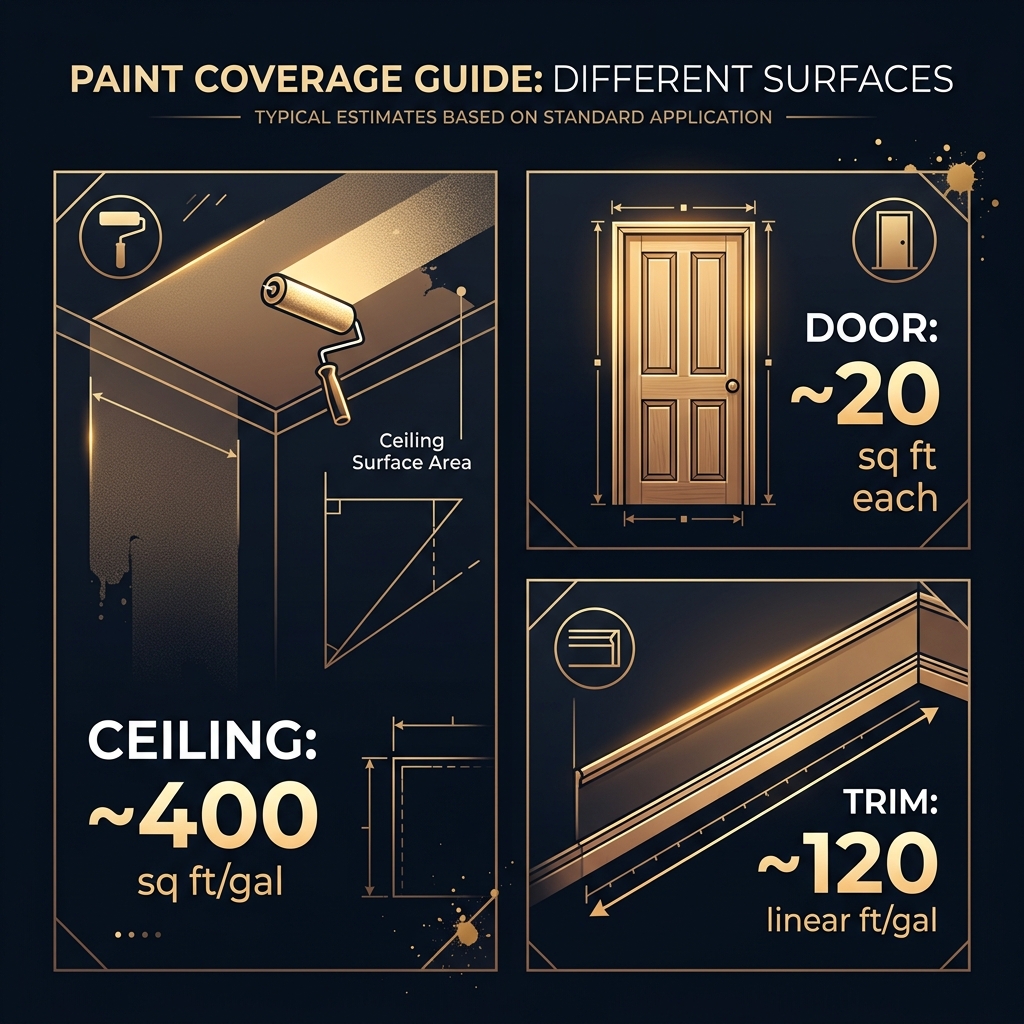
Figure 4: Non-wall architectural elements like ceilings, doors, and trim require specialized coverage estimations.
Ceiling Paint
Ceiling area equals floor square footage (Width × Length). A 12x12 room has 144 sq ft of ceiling. One gallon of flat ceiling paint covers ~350-400 sq ft, meaning 1 gallon comfortably handles ceilings up to 15x20 feet (300 sq ft) for two coats.
Door Paint
A standard interior door (both sides plus casing edge) measures roughly 40 square feet of paintable surface. One quart of semi-gloss door and trim paint will cover 2 to 3 complete doors with two coats.
Trim Paint
Trim and baseboards are measured in linear feet. For standard 4-inch baseboards, multiply linear feet by 0.33 to get square footage. 100 linear feet of trim equals ~33 sq ft of surface. One quart of trim paint covers approximately 120 to 150 linear feet of baseboards for two coats.
How to Get the Most Coverage From a Gallon of Paint
Maximizing gallon yield without sacrificing film thickness or finish quality relies on professional field techniques.
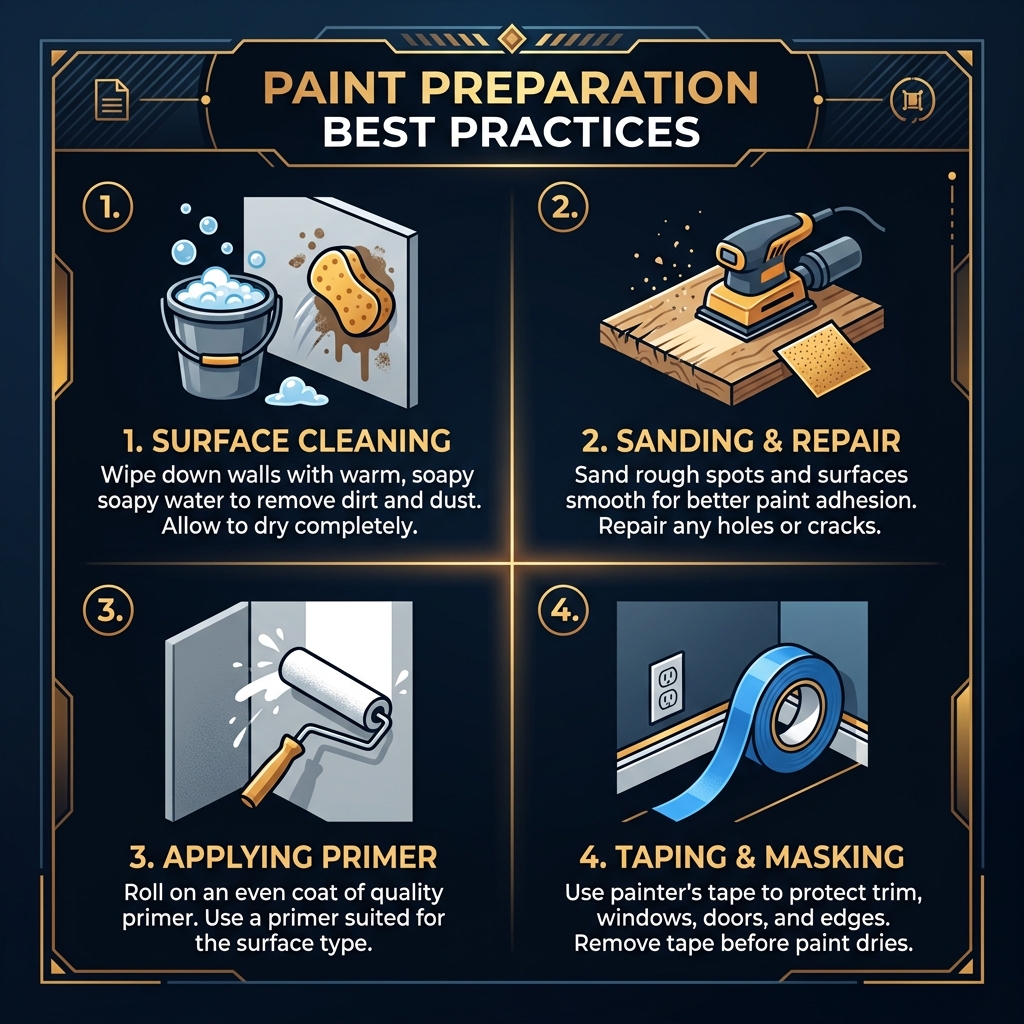
Figure 5: Proper surface preparation and tool selection increase paint coverage while producing a flawless finish.
Prepare the Surface Properly
Clean walls thoroughly to remove dust, grease, and soot. Patch holes with spackle, sand smooth with 120-grit sandpaper, and apply dedicated primer over patched spots to prevent uneven absorption ("flashing").
Choose the Right Painting Tools
Use premium woven roller covers (3/8-inch nap for smooth drywall) that release paint smoothly without shedding lint. Quality synthetic filament brushes hold and spread paint evenly along edges.
Apply Paint Evenly
Maintain a wet edge while rolling, working in 3x3 foot "W" or "N" patterns before laying down smooth vertical passes. Avoid over-rolling drying paint, which pulls up film and creates thick, uneven patches.
Follow the Manufacturer's Coverage Rate
Do not over-thin paint with water or solvent unless instructed. Spread paint at the recommended wet film thickness indicated on the technical data sheet to ensure full coverage performance.
Paint Coverage Calculator
Use the mathematical formula below or our quick reference guide to verify your project paint quantities accurately.
Paint Coverage Formula
Worked Paint Calculation Example
Consider a living room measuring 15 ft wide by 20 ft long with 9 ft ceilings:
- Perimeter: (15 + 20) × 2 = 70 linear feet.
- Gross Wall Area: 70 ft × 9 ft = 630 square feet.
- Deductions: 1 entry door (21 sq ft) + 3 windows (45 sq ft) = 66 sq ft total openings.
- Net Wall Area: 630 - 66 = 564 square feet.
- Two-Coat Area: 564 × 2 = 1,128 square feet.
- Gallons Required: 1,128 ÷ 350 sq ft/gal = 3.22 gallons.
- Final Purchase: Rounding up with 10% safety cushion = 4 Gallons (or 1x 5-gallon pail).
Interactive Paint Gallon Estimator
Calculator ToolEnter your room details to calculate total wall area and required paint gallons instantly.
Frequently Asked Questions About Paint Coverage
On average, a standard single gallon of interior wall paint covers between 350 and 400 square feet on smooth, primed surfaces for one coat. Highly porous or heavily textured walls may reduce coverage to 250-300 square feet per gallon.
A single quart of paint is one-fourth of a gallon and covers approximately 90 to 100 square feet for one coat on smooth surfaces. It is ideal for small accent walls, doors, touch-ups, or trim projects.
A standard bedroom measuring 10x12 feet with 8-foot walls (350 sq ft of wall space) typically requires 1 gallon of paint for two coats after subtracting windows and doors.
A 12x12 room with 8-foot ceilings has roughly 384 sq ft of gross wall area. Subtracting openings leaves about 330 net sq ft. You will need 1 gallon for a single coat, but 2 gallons for standard two-coat coverage.
For two coats, simply double your total square footage (or divide the single-coat gallon requirement by 200 sq ft/gal). For example, 400 sq ft of wall space requires 2 gallons for complete two-coat protection.
Yes, textured surfaces like popcorn, knockdown, stucco, or masonry increase total surface area by 20% to 50%. A gallon on textured walls usually covers only 250 to 300 square feet.
When transitioning from a dark color to a light color or vice versa, you usually need an extra coat of high-hide primer plus two coats of topcoat paint to achieve full opacity without bleed-through.
It is standard practice to buy an extra 10% to 15% (or keep 1 quart of leftover mixed color) for future touch-ups, spills, roller absorption, and subtle wall repairs.
Conclusion
Understanding how many square feet a gallon of paint covers is the foundation of every successful painting project. By remembering the core benchmark of 350 to 400 square feet per gallon for one coat (or 175 to 200 square feet for two coats), you can reliably estimate material purchases, avoid mid-project delays, and keep project budgets strictly under control. Remember to adjust your calculations for surface texture, wall porosity, color changes, and application tools, and always include a 10% safety buffer for touch-ups. When planning comprehensive home renovation work alongside painting, explore our complete guides on calculating flooring requirements and estimating overall surface square footage.