How Many Feet Is a Football Field?
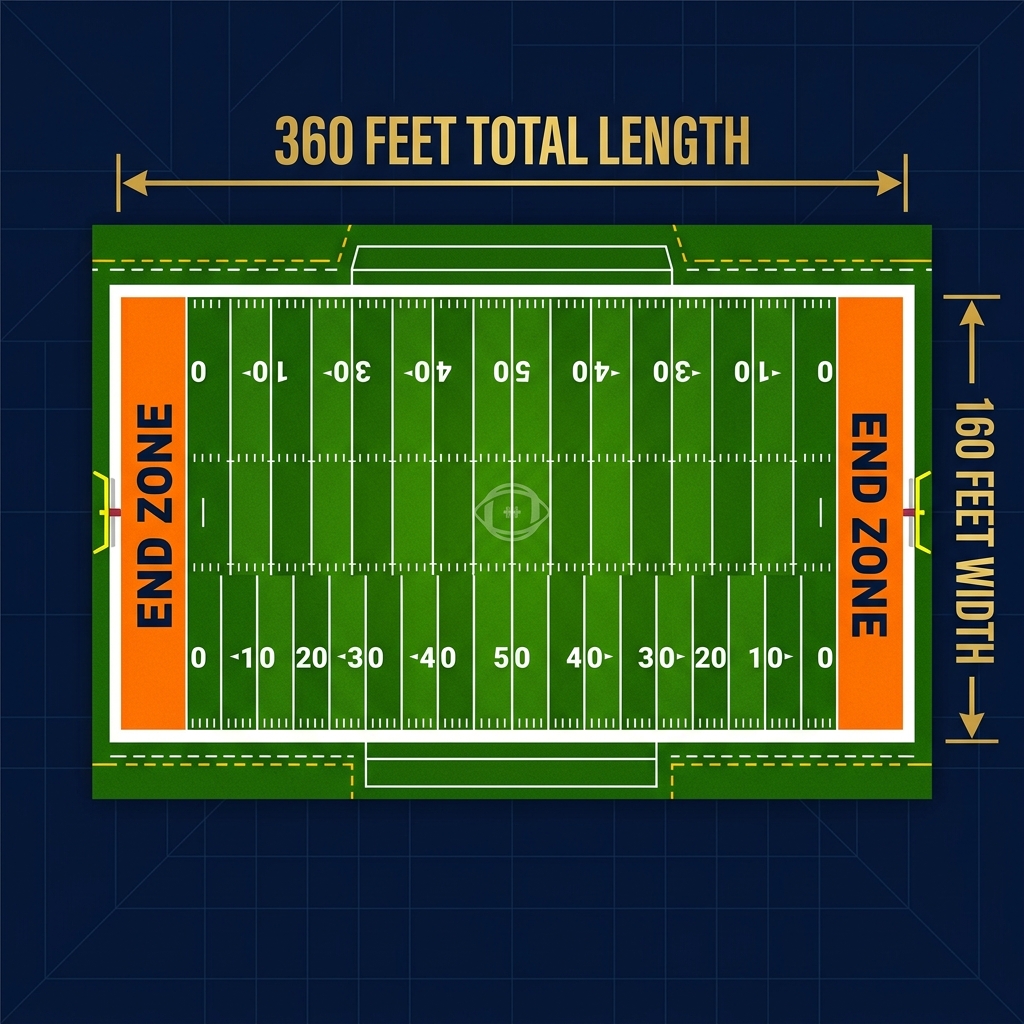
Figure 1: A regulation football field measures 360 feet long and 160 feet wide including both end zones.
A football field is one of the most recognized measurement references in the United States. Whether you are comparing property sizes, estimating construction material, or just settling a debate with friends, knowing the exact dimensions in feet matters. A regulation American football field is 360 feet long and 160 feet wide, covering a total area of 57,600 square feet. Those numbers include the two end zones. Without them, the playing field itself is 300 feet long. This guide breaks down every dimension, explains the math behind the square footage, and compares field sizes across NFL, college, and high school levels.
People frequently use the phrase "the size of a football field" as a rough measurement benchmark. Real estate agents describe lots in football fields. Engineers reference them in infrastructure reports. But most people only remember the 100-yard figure and forget the rest. That incomplete picture leads to confusion about total length, width, and area. By the end of this guide, you will know every official measurement by heart and understand how to calculate the square footage of any playing surface.
How Long Is a Football Field in Feet?
The total length of a football field depends on whether you include the end zones. Most casual references only count the 100-yard playing field, but the full regulation surface extends beyond both goal lines.
How Long Is the Playing Field?
The playing field stretches from one goal line to the other. That distance is exactly 100 yards, which equals 300 feet. This is the area where all regular play happens. Yard lines mark every five yards, and numbered markers appear at each 10-yard interval from the 10 to the 50 and back down to the 10 on the opposite side. The 50-yard line sits at the exact center, 150 feet from each goal line.
How Long Are the End Zones?
Each end zone extends 10 yards beyond the goal line. That adds 30 feet on each side of the playing field. Two end zones together contribute 60 feet to the total length. The end zone is where touchdowns are scored, and its depth gives receivers and runners room to complete plays near the boundary. Without end zones, there would be no space to catch a pass in the back corner of the scoring area.
How Wide Is a Football Field in Feet?
The width of a football field is consistent across all levels of American football. From youth leagues to the NFL, the official playing surface is 160 feet wide. That number translates to 53 and one-third yards, a measurement that often surprises people.
Why Is a Football Field 160 Feet Wide?
The 160-foot width dates back to the early standardization of American football in the late 1800s. When the sport separated from rugby and developed its own identity, field committees settled on dimensions that balanced gameplay with available stadium space. The width was designed to give offensive and defensive formations enough room to spread out while keeping the action visible to spectators. That original width has remained unchanged for over a century.
Why Is a Football Field 53 and One-Third Yards Wide?
The width of 53 and one-third yards is simply 160 feet converted to yards. Since one yard equals three feet, dividing 160 by 3 gives 53.333 repeating. The field was originally defined in feet, not yards, which is why the yard measurement comes out to an unusual fraction. This is one of the rare cases in American football where a measurement does not divide evenly into yards.
Football Field Dimension Visualizer
InteractiveToggle between field views to see dimensions in feet, yards, and meters.
Is a Football Field 300 Feet or 360 Feet Long?
This question causes more confusion than any other football field measurement. The answer depends on which parts of the field you include. Both 300 feet and 360 feet are correct measurements of a football field, but they describe different sections.
The 300-Foot Playing Field
The 300-foot figure refers to the playing field only, measured from goal line to goal line. This is the 100-yard stretch where the numbered yard lines run. When someone says a football field is 100 yards long, they are describing this section. All regular downs and drives take place within these 300 feet.
The Two 30-Foot End Zones
Each end zone adds 30 feet beyond the goal line. The end zone extends from the goal line to the end line at the back of the field. With one end zone on each side, the total field grows from 300 feet to 360 feet. When comparing real estate parcels or construction sites to a football field, the 360-foot total gives the more accurate reference because it represents the entire playing surface.
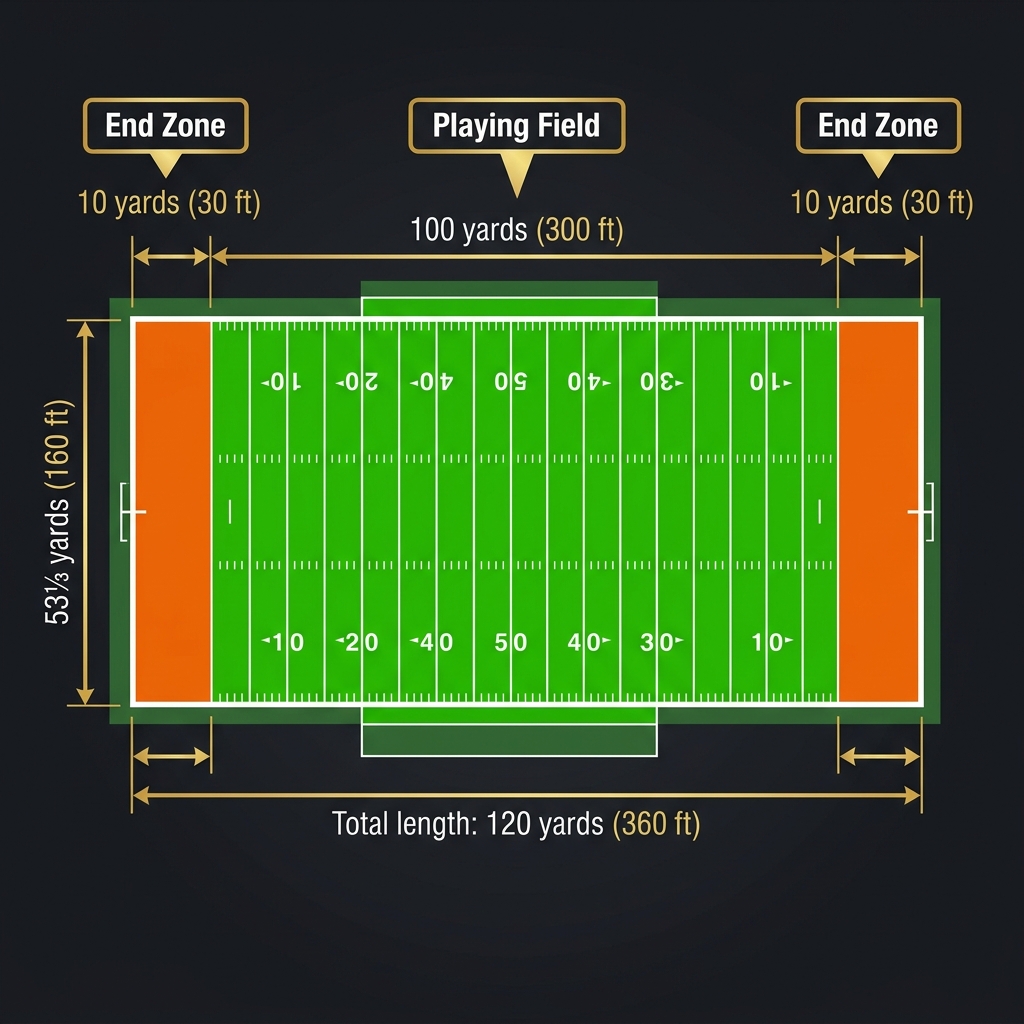
Figure 2: The playing field is 300 feet, and each end zone adds 30 feet, totaling 360 feet.
What Are the Standard Dimensions of a Football Field?
Every regulation American football field follows the same dimensional standards. These measurements apply to NFL, NCAA, and NFHS fields, with only minor marking differences between levels.
Football Field Length and Width
The standard football field is 360 feet long and 160 feet wide. The playing field occupies the middle 300 feet, and an end zone fills each remaining 30-foot section. These dimensions create a rectangular surface with a length-to-width ratio of 2.25 to 1. That ratio makes football fields noticeably longer and narrower than soccer pitches or baseball outfields.
Football Field Dimensions in Feet, Yards, and Meters
| Measurement | Feet | Yards | Meters |
|---|---|---|---|
| Total Length | 360 | 120 | 109.73 |
| Playing Field | 300 | 100 | 91.44 |
| Each End Zone | 30 | 10 | 9.14 |
| Width | 160 | 53.33 | 48.77 |
How Many Square Feet Is a Football Field?
Knowing the square footage of a football field is valuable for comparing land areas, estimating material quantities, and putting large spaces into perspective. The calculation is straightforward once you know the length and width.
How to Calculate the Square Footage of a Football Field
Square footage equals length multiplied by width. Both measurements must be in feet. For a football field, you multiply the total length by the total width: 360 feet times 160 feet. That is the same area formula used for any rectangular surface, from a bedroom floor to a parking lot.
Square Footage Including the End Zones
The full football field including both end zones covers 57,600 square feet. The math is simple: 360 feet long multiplied by 160 feet wide equals 57,600 square feet. That is roughly 1.32 acres. To put it in residential terms, the average American home sits on a lot of about 8,500 square feet, so a football field is nearly seven times the size of a typical house lot.
Square Footage of the Playing Field
The playing field without end zones covers 48,000 square feet. That comes from 300 feet times 160 feet. The two end zones together add 9,600 square feet (each end zone is 30 feet times 160 feet, or 4,800 square feet). If someone asks you to compare a piece of land to a football field, clarify whether they mean the playing field or the full surface.
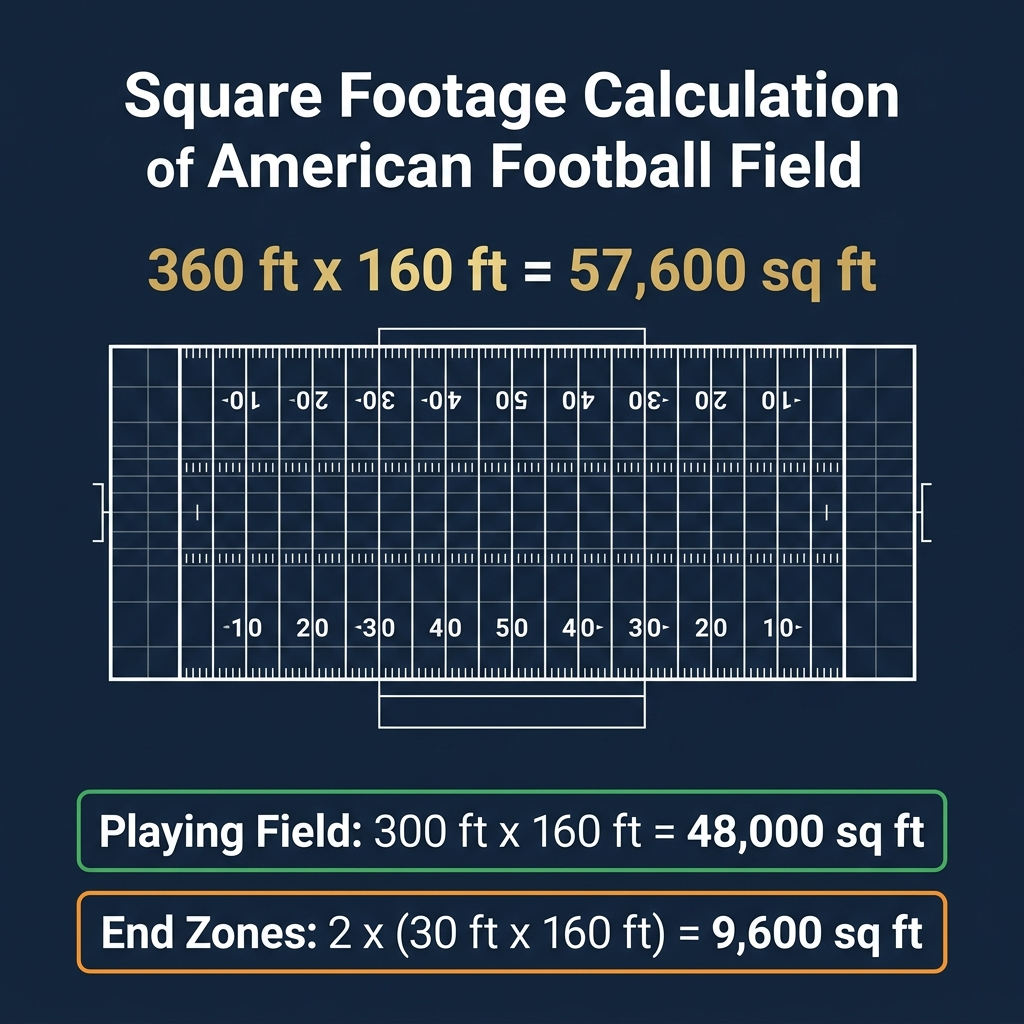
Figure 3: A full football field covers 57,600 square feet, with 48,000 on the playing field and 9,600 in the end zones.
Football Field Area Calculator
Interactive ToolSee how a football field compares to common property sizes.
What Are the Different Parts of a Football Field?
A football field contains several distinct markings and structural elements. Each one serves a specific purpose during gameplay and officiating.
Yard Lines
Yard lines run across the width of the field every five yards. They create the visual grid that players, coaches, and fans use to track field position. Every 10 yards, a large number marks the distance from the nearest goal line. These numbered lines count from 10 to 50 at midfield and back down to 10 on the other side. Each yard line is 160 feet long, spanning the entire width of the field.
Hash Marks
Hash marks are short lines running parallel to the sidelines. They indicate each one-yard increment between the five-yard lines. After every play that ends between the hash marks and the sideline, officials place the ball on the nearest hash mark for the next snap. Hash mark spacing differs by level: NFL hash marks are 18 feet 6 inches apart, college hash marks are 40 feet apart, and high school hash marks are 53 feet 4 inches apart.
Goal Lines
The goal lines mark the front edge of each end zone. They run the full 160-foot width of the field. When a player carries the ball across the goal line or catches a pass in the end zone, the result is a touchdown. The goal line is the most important boundary in football scoring.
Sidelines and End Lines
The sidelines run along the two long edges of the field. Each sideline is 360 feet long. The end lines run along the back edge of each end zone, each 160 feet long. Together, the sidelines and end lines form the outer boundary of the playing surface. A player who steps on or beyond these lines is out of bounds.
Field Boundaries
The field boundary is the complete perimeter formed by the two sidelines and two end lines. The total perimeter of a football field is 1,040 feet: two sides at 360 feet each plus two ends at 160 feet each. That perimeter equals approximately 0.197 miles.
Goal Posts
Goal posts stand at the back of each end zone, centered on the end line. The NFL and college goal posts have a crossbar 10 feet above the ground and two vertical uprights extending 35 feet above the crossbar (30 feet in college). The uprights are 18 feet 6 inches apart. Field goal and extra point kicks must pass between and above the uprights to score.
Buffer and Run-Off Areas
Beyond the official field boundaries, stadiums maintain buffer zones for player safety. The NFL requires a minimum 6-foot-wide border of solid surface around the entire field. Team benches, camera operators, and chain crews occupy designated areas along the sidelines. These zones do not count toward the official field dimensions but are essential for safe gameplay.
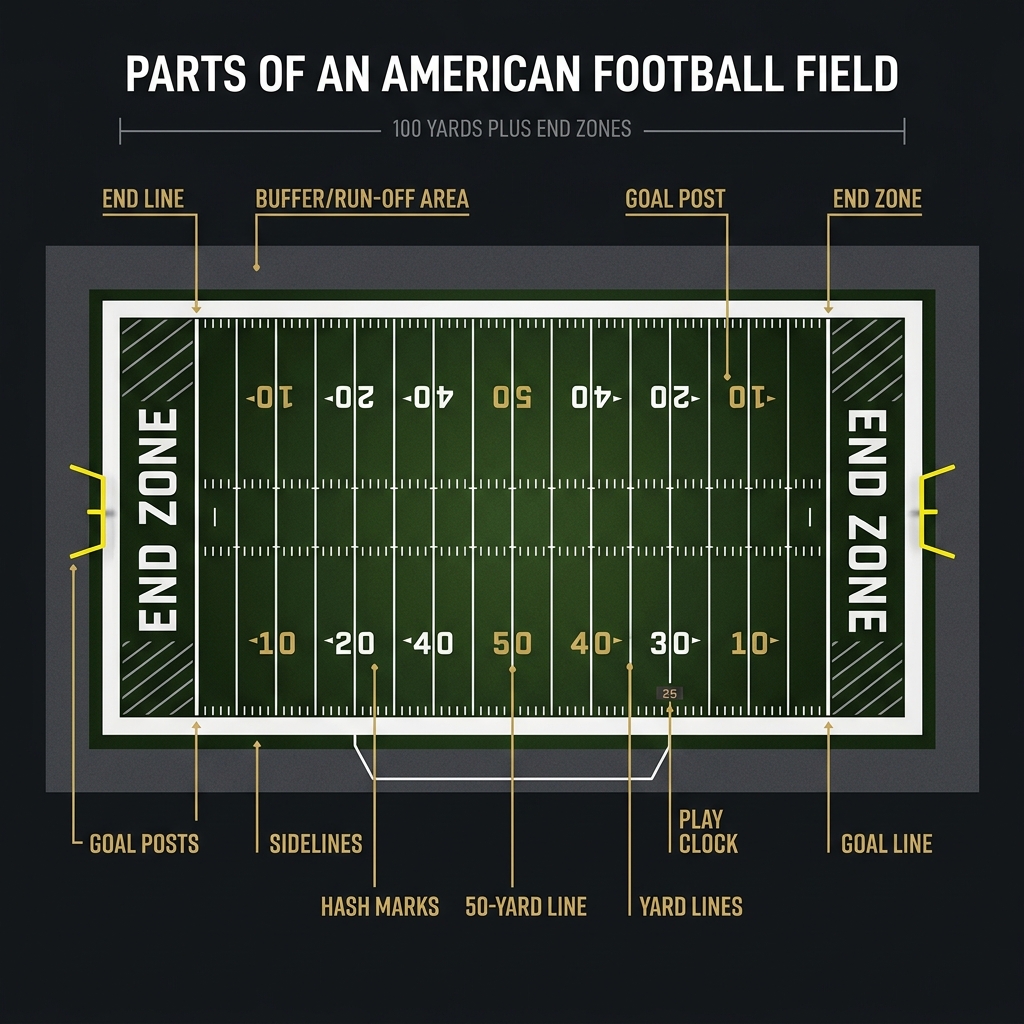
Figure 4: Every marking on a football field serves a specific purpose for gameplay, scoring, and officiating.
How Do You Measure a Football Field?
Measuring a football field requires accurate tools and a systematic approach. Whether you are laying out a field for a local league or verifying an existing surface, here is how to do it correctly.
Measuring the Field Length
Start at one end line and measure 360 feet to the opposite end line. Mark the goal lines at 30 feet and 330 feet from the starting end line. Use a steel tape or a surveyor's wheel for accuracy over this distance. Laser distance measurers can work for verification but may be affected by wind or sunlight over 360 feet. Check the measurement at both sidelines to ensure the end lines are parallel.
Measuring the Field Width
Measure 160 feet across the field at multiple points: both end lines, both goal lines, and the 50-yard line at minimum. All five measurements should read 160 feet. If they do not match, the field corners are not square. Use the 3-4-5 triangle method or a construction square at each corner to verify right angles.
Measuring the End Zones
Each end zone should measure exactly 30 feet from the goal line to the end line. Verify this measurement at the left sideline, center, and right sideline. The end zone must be the same 160-foot width as the rest of the field. Any variance greater than a few inches requires adjustment before the field meets regulation standards.
Are NFL, College, and High School Football Fields the Same Size?
The overall dimensions are identical across all three levels. Every regulation field is 360 feet long and 160 feet wide. The differences lie in the field markings, not the dimensions.
NFL Football Field Dimensions
NFL fields measure 360 feet by 160 feet with hash marks set 18 feet 6 inches apart, centered on the field. The narrow hash mark spacing forces the ball closer to the center of the field, creating more balanced offensive attack options. The goal post uprights are also 18 feet 6 inches apart and extend 35 feet above the 10-foot crossbar.
College Football Field Dimensions
College fields share the same 360 by 160 foot dimensions. The key difference is hash mark spacing: 40 feet apart, significantly wider than the NFL. This wider placement means plays starting near the hash marks have a noticeable "wide side" and "short side" of the field, which influences offensive play calling and defensive alignment. College goal post uprights match the NFL at 18 feet 6 inches apart.
High School Football Field Dimensions
High school fields are also 360 feet by 160 feet. The hash marks are the widest of all three levels at 53 feet 4 inches apart, just 6 feet 8 inches from the sidelines. This extreme width creates dramatic differences between the wide and short sides of the field. High school goal post uprights are 23 feet 4 inches apart, wider than college or NFL to make field goals slightly easier for younger kickers.
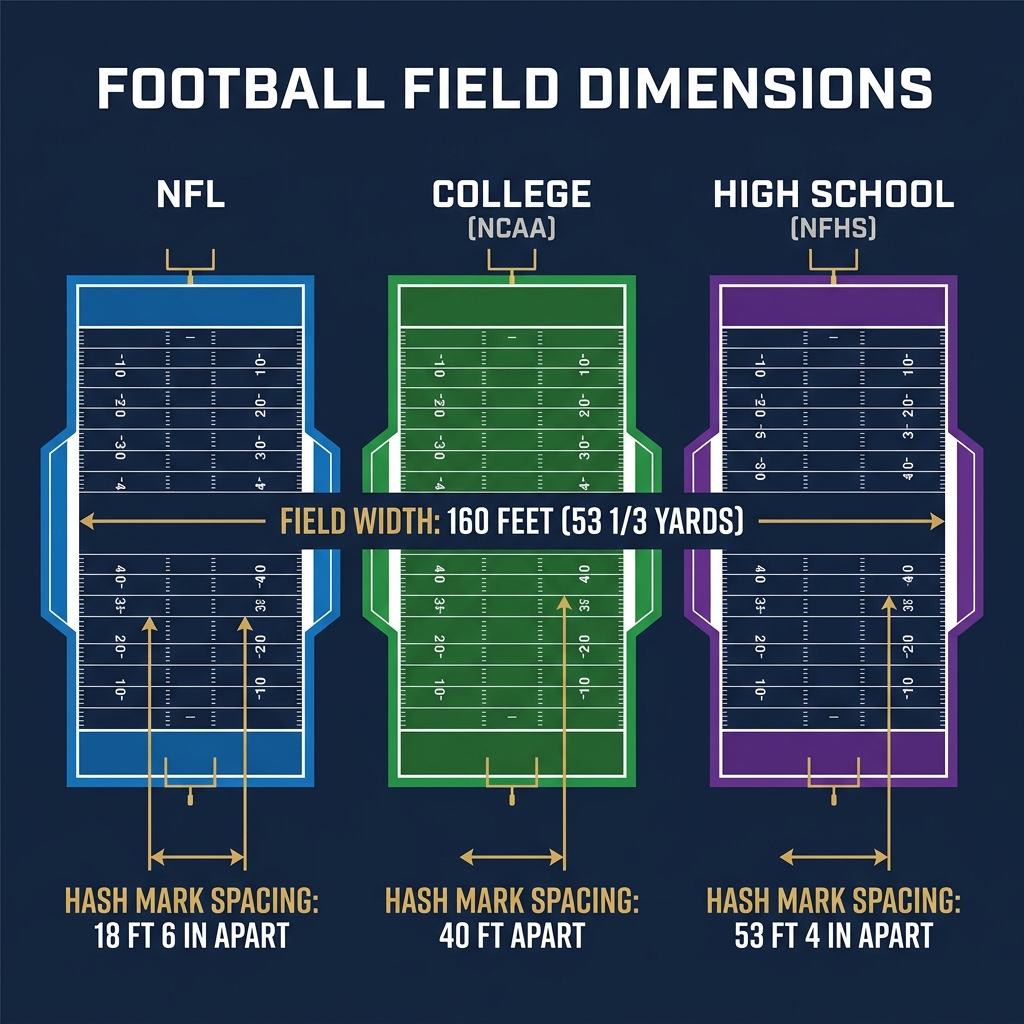
Figure 5: NFL, college, and high school fields share the same 360 x 160 ft dimensions but differ in hash mark spacing.
| Feature | NFL | College | High School |
|---|---|---|---|
| Field Length | 360 ft | 360 ft | 360 ft |
| Field Width | 160 ft | 160 ft | 160 ft |
| Hash Mark Spacing | 18 ft 6 in | 40 ft | 53 ft 4 in |
| Goal Post Width | 18 ft 6 in | 18 ft 6 in | 23 ft 4 in |
| Upright Height | 35 ft | 30 ft | 30 ft |
How Many Feet Is a Football Field Compared With Other Distances?
Understanding how a football field relates to other common distance measurements helps put its size in perspective.
How Many Feet Are in 100 Yards?
There are exactly 300 feet in 100 yards. Since one yard equals 3 feet, the conversion is simply 100 multiplied by 3. This is the length of the playing field from goal line to goal line, the distance most people think of when they picture a football field.
How Many Feet Are in 120 Yards?
There are 360 feet in 120 yards. The calculation is 120 multiplied by 3. This represents the full length of a football field including both end zones. When someone asks "how many feet is a football field," 360 feet is the most complete and accurate answer.
How Many Football Fields Are in a Mile?
A mile is 5,280 feet. Dividing 5,280 by 360 gives 14.67. That means approximately 14 and two-thirds football fields fit end to end in one mile. If you only count the 300-foot playing fields, the number rises to 17.6 fields per mile. This comparison is popular in running and fitness contexts. Runners completing a mile cover the equivalent of nearly 15 football fields.
| Distance | Feet | Football Fields |
|---|---|---|
| 100 Yards | 300 | 0.83 (playing field) |
| 120 Yards | 360 | 1.00 (full field) |
| Quarter Mile | 1,320 | 3.67 |
| Half Mile | 2,640 | 7.33 |
| 1 Mile | 5,280 | 14.67 |
| 1 Kilometer | 3,281 | 9.11 |
Frequently Asked Questions About Football Field Dimensions
A football field is 360 feet long including both end zones and 160 feet wide. The playing field alone is 300 feet long. The total area covers 57,600 square feet.
The total length is 360 feet from one end line to the other. This includes 300 feet for the playing field and two 30-foot end zones.
A football field is 160 feet wide, which equals 53 and one-third yards. This width is the same for NFL, college, and high school fields.
Both numbers are correct depending on what you measure. The playing field between the goal lines is 300 feet. Add the two 30-foot end zones and the total length becomes 360 feet.
A full football field including end zones is 57,600 square feet, about 1.32 acres. The playing field alone without end zones is 48,000 square feet.
The playing field is 100 yards long. Including both end zones the total length is 120 yards. The width is 53 and one-third yards.
A football field is 109.73 meters long including end zones and 48.77 meters wide. The playing field alone is 91.44 meters long.
Conclusion
A regulation American football field is 360 feet long and 160 feet wide, covering 57,600 square feet including both end zones. The playing field between the goal lines measures 300 feet, and each end zone adds 30 feet. The width of 160 feet translates to 53 and one-third yards. NFL, college, and high school fields all share these exact outer dimensions, differing only in hash mark spacing and goal post width. Whether you are using a football field as a measurement reference for a real estate comparison, a construction estimate, or a trivia answer, 360 feet by 160 feet is the number to remember. For quick area comparisons, a full football field is roughly 1.32 acres or 6.8 times the size of an average American home lot.