How Does Material Width Affect Square Foot Coverage?
Last summer, I remodeled my home office using hardwood flooring planks. I needed to cover exactly 150 square feet. I bought 150 linear feet of planks, assuming the conversion was equal. However, the planks were only three inches wide. They covered only half the room. I forgot that linear measurements do not account for material width.
If you buy building materials like flooring, decking, or lumber, you will face this issue. Understanding how does material width affect square foot coverage protects your budget and project timeline. This guide covers the formulas, conversion charts, and practical methods to get your measurements right.
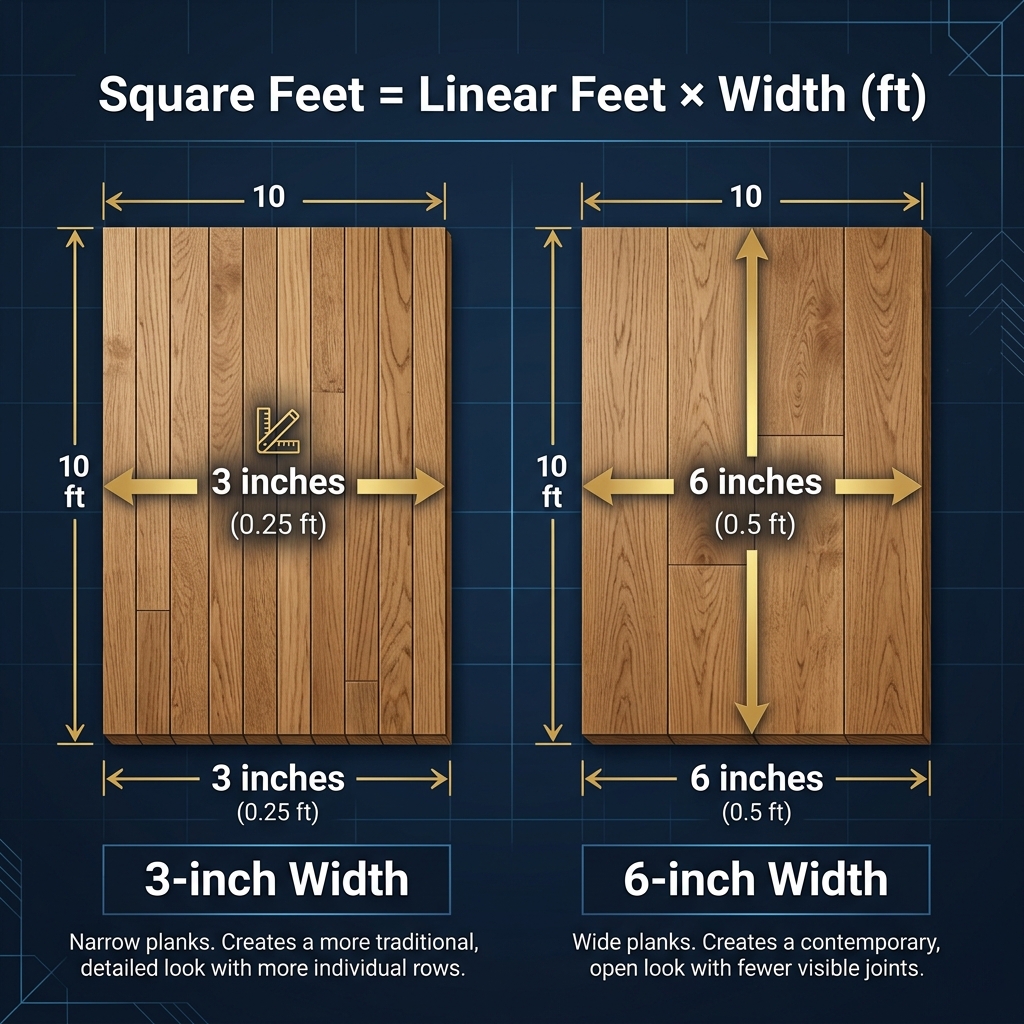
Figure 1: Comparison of square foot coverage using narrow versus wide boards for the same linear length.
This guide explains the relationship between linear feet, width, and square foot coverage. You will learn the exact formula to convert linear measurements into surface area. We cover standard dimensions, conversion tables, and common calculation pitfalls to help you estimate materials with confidence.
Why Does Material Width Matter for Square Foot Coverage?
Material width matters for square foot coverage because area requires both length and width. A linear foot only measures one dimension of length. Multiply the total linear feet by the material width in feet to calculate coverage.
The Relationship Between Length, Width, and Area
Area represents the total surface space of a flat object. You calculate area by multiplying length by width. A linear foot only represents length. You cannot calculate area without knowing the second dimension.
Why the Same Linear Feet Can Cover Different Areas
The same linear footage yields different area coverage based on width. If 100 linear feet of cedar pickets are three inches wide, they cover twenty-five square feet. If six inches wide, they cover fifty square feet.
How Does Material Width Affect Square Feet?
Material width affects square feet by changing the coverage ratio of each linear foot. A wider material covers more square footage per foot, reducing the total length needed. A narrower material covers less area per foot, requiring more linear feet.
Narrow Materials and Square Foot Coverage
Narrow building materials require more pieces to cover a room. Standard oak strip flooring is often two or three inches wide. Working with narrow materials increases installation time and fastener count.
Wide Materials and Square Foot Coverage
Wide materials cover large areas quickly with fewer seams. Wide plank flooring ranges from seven to twelve inches wide. One linear foot of twelve-inch board covers exactly one square foot.
Comparing Different Material Widths
Choosing between narrow and wide materials involves trade-offs. Narrow planks look traditional and handle temperature fluctuations well. You might ask: how does material width affect square foot coverage when comparing two options? Your choice changes the total linear length.
Live Plank Coverage Visualizer
Interactive ToolAdjust the material width and total length sliders below. Watch how the width scales the square footage and changes the plank visual representation in real time.
How to Calculate Square Foot Coverage from Linear Feet and Width
If you wonder how does material width affect square foot coverage, the answer lies in the math. Convert the material width from inches to feet by dividing by twelve. Then, multiply the total length in linear feet by the width in feet.
Square Foot Coverage Formula
The formula to determine area coverage from linear length is simple. Square Feet equals Linear Feet multiplied by Width in Feet. If you have 100 linear feet of two-foot-wide material, you cover 200 square feet.
Converting Material Width from Inches to Feet
Most building materials list width in inches. Divide the width in inches by twelve. A six-inch board becomes half a foot wide. Always perform this conversion first.
Calculating Coverage Step by Step
Follow these steps to calculate board coverage. First, measure the actual width in inches. Second, divide by twelve to find the width in feet. Third, multiply the linear feet by the decimal width.
How Much Square Footage Does One Linear Foot Cover?
One linear foot covers a specific square footage based entirely on the width of the material. Divide the width in inches by twelve to find the coverage per linear foot.
Coverage for 6-Inch-Wide Material
A six-inch-wide board is exactly half a foot wide. To find its coverage, divide six by twelve. One linear foot of six-inch material covers zero point five square feet.
Coverage for 12-Inch-Wide Material
A twelve-inch-wide board is exactly one foot wide. One linear foot of twelve-inch material covers exactly one square foot. You need one linear foot to cover one square foot.
Linear Feet to Square Feet Coverage Chart
A coverage chart provides a quick reference for common material widths. It allows builders to look up coverage values without performing manual calculations.
Coverage by Material Width
The following table displays square foot coverage for standard board widths. These calculations are based on the actual physical width of the material.
| Nominal Width | Actual Width (Inches) | Actual Width (Feet) | Coverage per Linear Foot | Linear Feet Needed for 100 Sq Ft |
|---|---|---|---|---|
| 1x3 | 2.5 in | 0.208 ft | 0.208 sq ft | 480 LF |
| 1x4 | 3.5 in | 0.292 ft | 0.292 sq ft | 343 LF |
| 1x6 | 5.5 in | 0.458 ft | 0.458 sq ft | 218 LF |
| 1x8 | 7.25 in | 0.604 ft | 0.604 sq ft | 166 LF |
| 1x10 | 9.25 in | 0.771 ft | 0.771 sq ft | 130 LF |
| 1x12 | 11.25 in | 0.938 ft | 0.938 sq ft | 107 LF |
Comparing Coverage at Different Linear Foot Lengths
Analyzing the table shows how width scales area coverage. This chart shows how does material width affect square foot coverage across different lengths. Small differences in width create massive differences in total area.
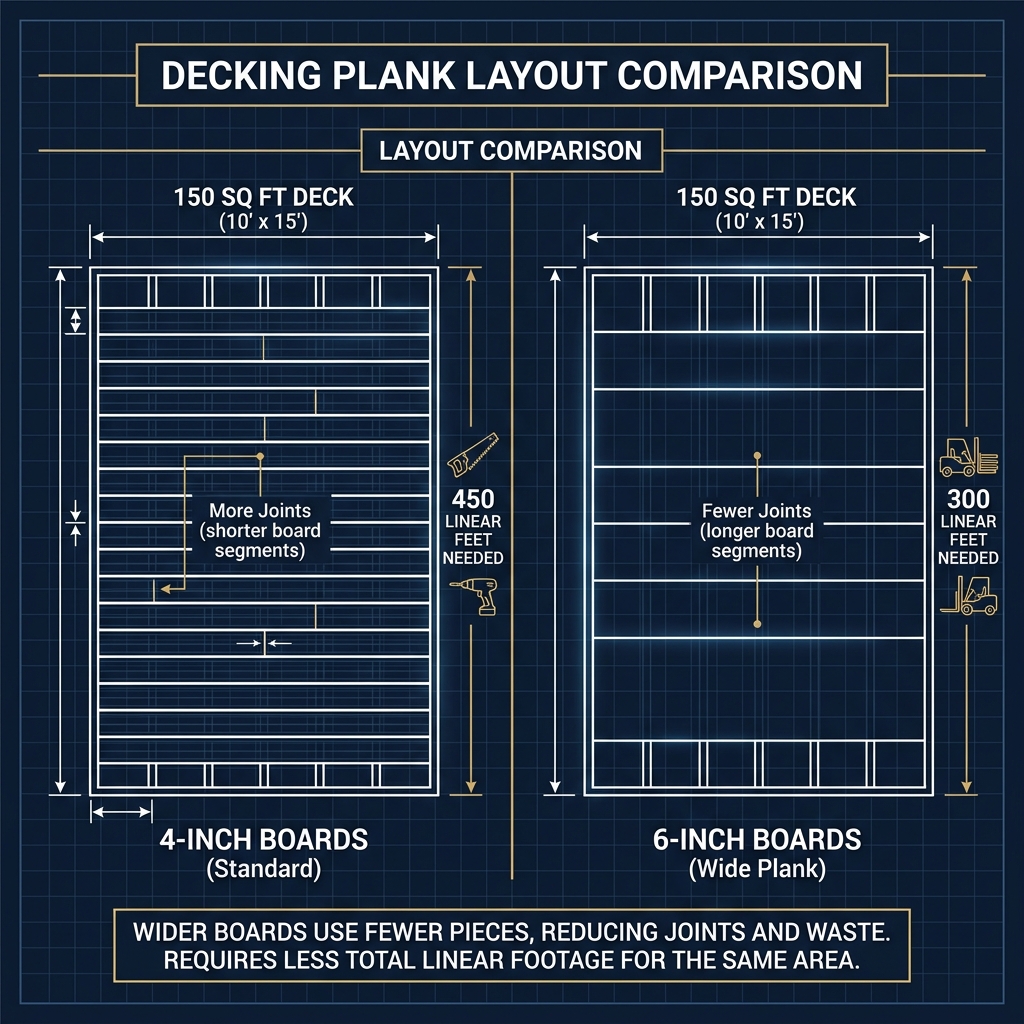
Figure 2: Layout comparison demonstrating how narrow planks require more joins and cuts compared to wide planks.
How Material Width Affects Flooring Coverage
Material width affects flooring coverage by changing the number of rows required to cover a room. Narrow planks require more rows, while wide planks install faster. You must calculate the actual plank width to estimate flooring coverage accurately.
Flooring Plank Width and Area Coverage
Flooring planks come in standard widths like three, five, and seven inches. I remodeled a 150-square-foot hallway. The three-inch planks required 600 linear feet compared to 360 for five-inch planks.
Calculating Flooring Coverage from Linear Feet
To calculate flooring coverage, multiply the total linear feet of flooring by the face width in feet. Do not include the tongue of tongue-and-groove planks. Only measure the visible face width after installation. If you buy 400 linear feet of three-inch oak flooring, you cover 100 square feet.
Accounting for Gaps, Cuts, and Waste
You must add a waste allowance to your calculations. Installing flooring requires cutting boards to fit boundaries. Narrow planks usually require a ten percent waste factor. Wide planks require a fifteen percent waste factor because offcuts are larger. Always purchase extra material to cover these cutting losses.
How Material Width Affects Lumber and Decking Coverage
Material width affects lumber and decking coverage because wood dimensions are sold using nominal sizes that differ from actual sizes. You must use the actual physical width of the board to calculate coverage. Using nominal dimensions will leave you short of material.
Board Width and Square Foot Coverage
Dimensional lumber is labeled with nominal sizes like one-by-six or two-by-four. These numbers represent the size before planning. The actual size is smaller. A nominal one-by-six board is actually five and a half inches wide. A nominal one-by-four board is three and a half inches wide.
Calculating Decking Coverage from Linear Feet
Let us look at a deck case study. I built a twelve-by-sixteen deck. The total area was 192 square feet. I used nominal six-inch decking boards. The actual width was five and a half inches. Five point five divided by twelve is zero point four-five-eight feet.
Comparing Different Board Widths
Comparing board widths helps you balance materials and labor. Wider decking boards require fewer fasteners and structural joist support. However, wider boards cost more per linear foot. Calculate the total cost for each option.
How to Calculate Coverage When Material Widths Vary
To calculate coverage when material widths vary, calculate the square foot coverage of each width separately, then add the results together. Do not average the widths before calculating, as this creates mathematical errors. Group your materials by width to ensure an accurate total.
Calculating Coverage for Multiple Material Widths
Some modern projects use mixed-width designs. You might combine three-inch, five-inch, and seven-inch planks. To calculate total coverage, measure the linear feet for each width. Calculate the area for each width separately. For example, calculate the area of the three-inch boards. Finally, add these individual area totals.
Combining Materials with Different Widths
Combining different widths requires a consistent installation pattern. You must plan the layout to ensure a balanced appearance. Suppose you mix equal lengths of three-inch and six-inch planks. One linear foot of three-inch material covers zero point two-five square feet. One linear foot of six-inch material covers zero point five square feet.
Handling Partial Pieces and Irregular Measurements
Irregular boundaries require custom cuts. You will end up with partial boards and odd shapes. Measure these partial pieces carefully. I use a Bosch laser measure for precise boundaries. Round your measurements to the nearest inch.
Common Mistakes When Calculating Material Coverage
Common mistakes when calculating material coverage include confusing linear feet with square feet, using nominal board widths instead of actual dimensions, forgetting to convert inches to feet, and ignoring waste allowances. These errors lead to incorrect material orders and project delays.
Assuming One Linear Foot Always Equals the Same Square Footage
This is the most frequent error. This error happens when builders ignore how does material width affect square foot coverage. If your material is six inches wide, one linear foot is only half a square foot. If you ignore the width, you will order the wrong amount of material.
Forgetting to Convert Inches to Feet
Multiplying linear feet by width in inches is a major mathematical mistake. If you multiply 100 linear feet by six inches, you get 600. This number does not represent square feet. You must convert six inches to zero point five feet first. Multiplying 100 by zero point five yields fifty square feet.
Using Nominal Instead of Actual Material Width
Using nominal sizes is a trap for unwary builders. Lumber yards sell wood by nominal names like one-by-four. The actual width of a one-by-four is only three and a half inches. If you calculate area using four inches, you will order too little material.
Ignoring Material Waste
Every construction project generates waste from cuts. If you order the exact square footage of your room, you will run short. Always add a waste factor to your order. For standard layouts, add ten percent. For complex layouts with angles or columns, add fifteen percent.
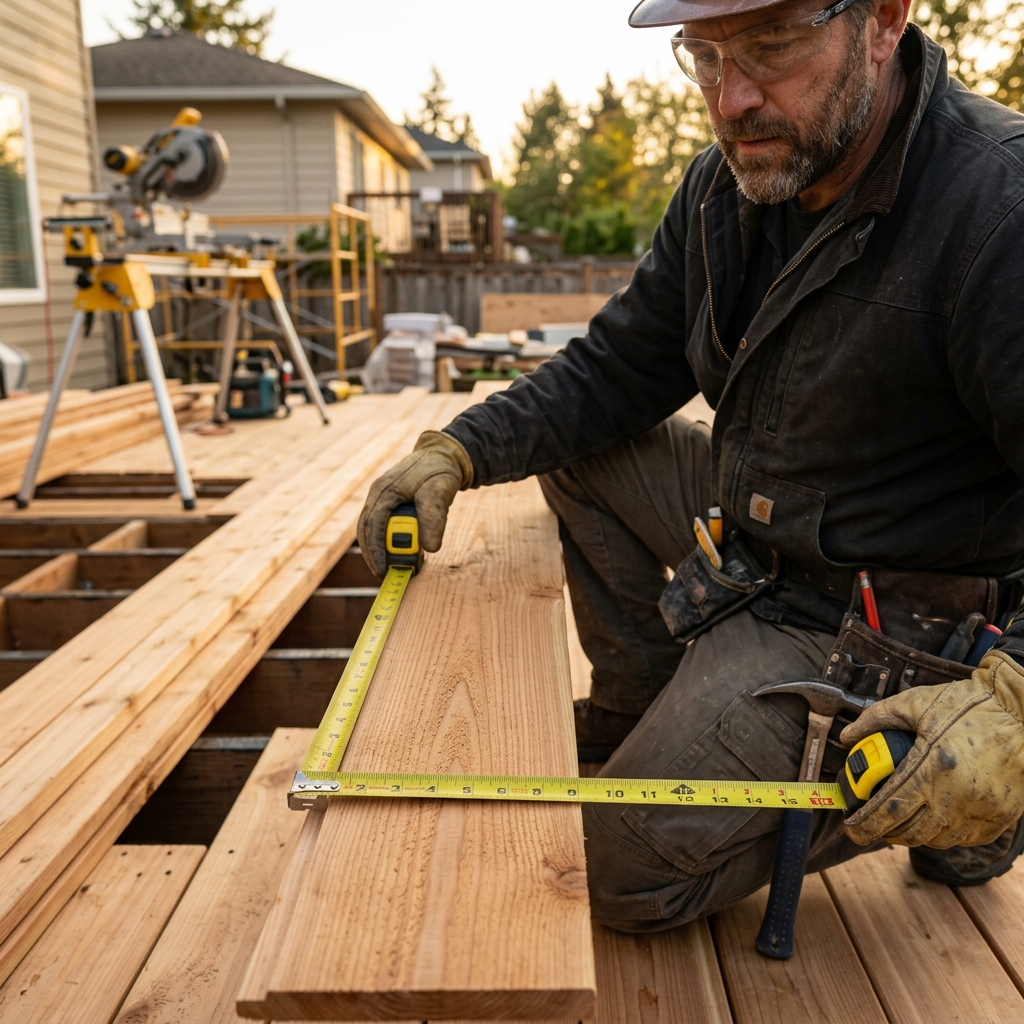
Figure 3: Practical construction installation showing physical measurement of actual width.
Frequently Asked Questions
Yes, material width directly changes square foot coverage. A wider board covers more surface area per linear foot than a narrow board. You must know the width to convert linear feet to square feet.
One linear foot covers a specific square footage based on its width. Divide the width in inches by twelve to find the coverage. A six-inch board covers zero point five square feet per linear foot.
Yes, wider material requires fewer linear feet to cover the same area. A twelve-inch board covers twice as much area per foot as a six-inch board. You will need half the linear length.
Yes, you can calculate square feet by converting the width to feet first. Divide the width in inches by twelve. Then, multiply that decimal by the total linear feet.
Flooring width changes the total linear footage required and the waste factor. Wider planks require fewer linear feet but need a higher waste allowance of fifteen percent due to larger offcuts.
When using different widths, you must calculate the coverage for each width separately. Multiply the linear feet of each width by its respective width in feet, then sum the areas.
Final Thoughts
Understanding how does material width affect square foot coverage is essential for successful building projects. By applying the formulas in this guide, you can estimate materials accurately. Remember to convert inches to feet, use actual widths instead of nominal sizes, and add a waste factor. Now you can plan your projects accurately.