When Should You Use Square Feet or Square Yards?
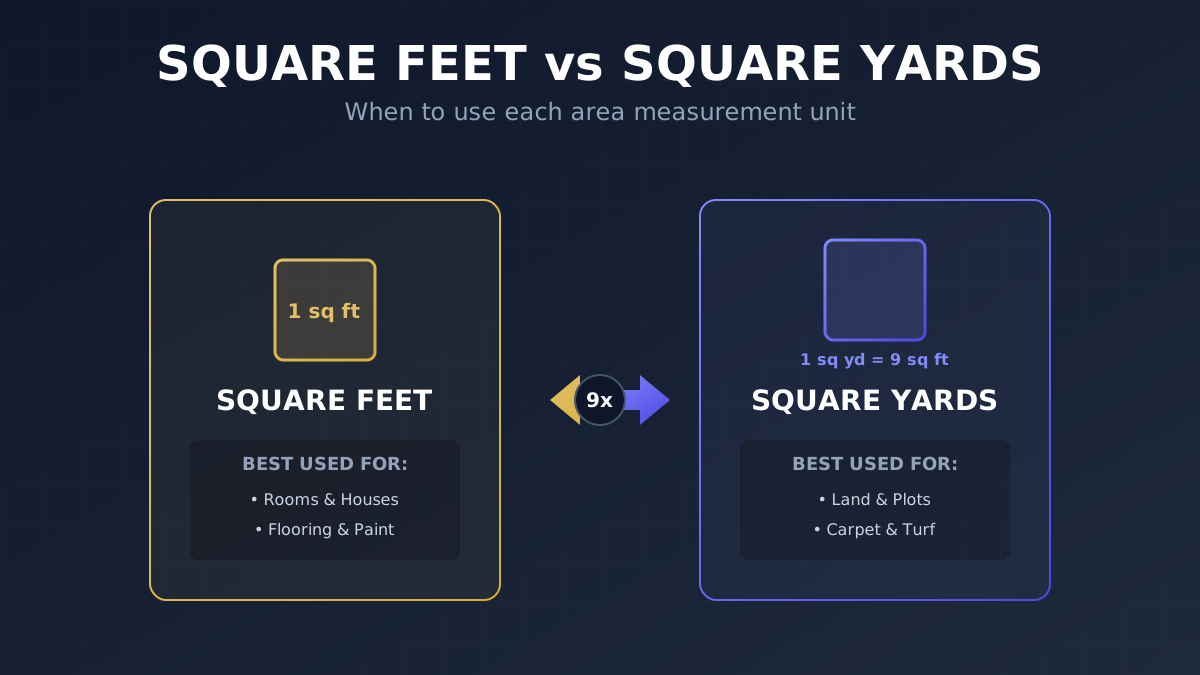
Figure 1: Square feet and square yards both measure area, but each unit fits different projects and industries.
A friend of mine ordered 200 square yards of turf for his backyard last spring. The landscaping company delivered the material and started rolling it out. Halfway through, he realized the yard measured 200 square feet, not 200 square yards. He ended up with nine times more grass than he needed. That single unit confusion cost him over $400 in return shipping and restocking fees. Choosing the right area unit before you start measuring is one of the simplest ways to protect your budget and avoid costly mistakes on any home or land project.
Both square feet and square yards measure area. Both describe flat, two-dimensional space. The critical difference lies in scale and context. Some industries default to square feet. Others rely on square yards. Understanding when each unit makes sense gives you a clear advantage when buying materials, comparing property listings, or communicating with contractors. Our square feet to square yards calculator handles the math instantly, but knowing the reasoning behind your unit choice matters even more than running the conversion.
Understanding Square Feet and Square Yards
Before deciding which unit to use, you need to understand what each one represents physically. Both units quantify flat area, but they operate at very different scales. Think of the difference like choosing between inches and feet for length. Both work, but one fits small objects while the other fits rooms.
What Is a Square Foot?
A square foot is the area inside a square that measures one foot on each side. Each edge spans 12 inches, and the total flat space inside equals 144 square inches. In the United States, square feet serve as the default area measurement for residential real estate, building permits, insurance documents, and most construction work. When a listing says a home is 2,400 square feet, that number describes the total livable floor area. For a detailed walkthrough of measuring rooms and buildings, see our complete guide on how to calculate square feet.
What Is a Square Yard?
A square yard is the area inside a square that measures one yard (3 feet) on each side. That gives it a total area of 9 square feet. The carpet industry has priced and sold products by the square yard for decades. Landscaping suppliers quote sod, artificial turf, and ground cover in square yards. In countries like India and Pakistan, land plots are commonly measured in square yards (often called "gaj"). Fabric stores also price textiles per square yard.
How Square Feet and Square Yards Are Related
The relationship between these two units is fixed and exact. One yard contains 3 linear feet. When you square that relationship across two dimensions, you get 3 multiplied by 3, which equals 9. So one square yard always contains exactly 9 square feet. This ratio never changes regardless of the shape or size of the area you measure.
When Should You Use Square Feet?
Square feet dominate indoor measurements in the United States and much of the English-speaking world. The numbers stay manageable for most residential and commercial spaces, and nearly every professional in real estate, construction, and home improvement speaks this language by default.
Measuring Rooms and Indoor Spaces
Room dimensions naturally produce clean numbers in square feet. A standard bedroom at 12 by 10 feet gives you 120 square feet. Expressing that as 13.33 square yards adds a decimal that makes quick mental comparisons harder. When discussing room sizes with a contractor or interior designer, square feet eliminate ambiguity. Our room square footage calculator uses square feet as the default output for this exact reason.
Measuring Houses and Building Areas
Real estate agents, appraisers, mortgage lenders, and building inspectors all reference house size in square feet. A 1,800 square foot home is instantly understandable to buyers and sellers. Converting that to 200 square yards technically works, but no MLS listing uses that format in the US market. Using the same unit as the industry prevents miscommunication at every stage of a property transaction.
Calculating Flooring and Interior Areas
Flooring retailers price laminate, hardwood, vinyl plank, and tile by the square foot. Product boxes list coverage in square feet per carton. Working in square feet from the start of a flooring project means you can compare prices and calculate orders without an extra conversion step. That one eliminated step removes a common source of ordering mistakes. For step-by-step help, our guide on calculating flooring square footage walks through the entire process.
When Should You Use Square Yards?
Square yards become the better choice when you work with larger outdoor areas, rolled materials, or industries that default to this unit. Knowing when to switch prevents over-ordering and keeps your numbers aligned with supplier quotes.
Measuring Land and Plots
Many countries measure land parcels in square yards. In India, residential plots are commonly quoted in square yards or "gaj." A 200 square yard plot is a standard size for a home in many cities. Even in the US, some older property records and survey documents reference square yards for lot size, especially in rural areas and historical deeds.
Measuring Large Outdoor Areas
Lawns, sports fields, parking lots, and agricultural patches produce large numbers in square feet. A half-acre lot covers 21,780 square feet but only 2,420 square yards. For large outdoor spaces, the smaller number in square yards is easier to work with mentally. Landscaping estimates and outdoor project bids frequently use square yards to keep figures manageable.
Buying and Estimating Landscaping Materials
Sod, artificial turf, outdoor carpet, and ground cover fabrics are sold by the square yard. When your supplier quotes a price per square yard, your measurements need to match that unit. Converting from square feet to square yards before placing an order ensures your purchase quantity lines up with the supplier's pricing format and avoids confusion over cost per unit.
When to Use Each Unit: Quick Reference
Visual Guide- ✓ Room measurements
- ✓ House and building area
- ✓ Flooring (tile, hardwood, vinyl)
- ✓ Paint and wall areas
- ✓ Real estate listings (US)
- ✓ Land and plot sizes
- ✓ Large outdoor areas
- ✓ Carpet and rolled materials
- ✓ Sod and artificial turf
- ✓ International land records
Square Feet vs. Square Yards for Property Measurements
Property measurements use both units depending on what part of the property you describe. Knowing the convention for each category prevents confusion when reading listings, contracts, and survey reports.
House Size in Square Feet
In the United States, every house listing states the gross living area in square feet. A 2,400 square foot home with three bedrooms, a kitchen, and two bathrooms uses that figure to describe all livable floor space. Appraisers follow the ANSI standard for measuring residential square footage, and their final number always appears in square feet. Buyers compare homes using this unit, and mortgage lenders calculate value per square foot for underwriting decisions.
Plot Size in Square Yards
Land plots follow different conventions depending on region. In India, Pakistan, and parts of the Middle East, residential plots are sold in square yards. A 120 square yard plot (sometimes written as "120 gaj") is a common residential lot. In the US, smaller urban lots may appear in square feet while larger rural parcels use acres. Historical US deeds sometimes reference square yards, so reviewing older property documents may require a conversion.
Why Property Measurements May Use Different Units
The unit choice for property reflects regional convention, industry practice, and the scale of the area. Buildings sit on a scale where square feet produce manageable three-to-four-digit numbers. Land parcels in many countries sit on a scale where square yards produce cleaner figures than the five-to-six-digit square foot equivalents. Neither unit is inherently better. The better unit is the one your local market, contractor, or government agency expects.
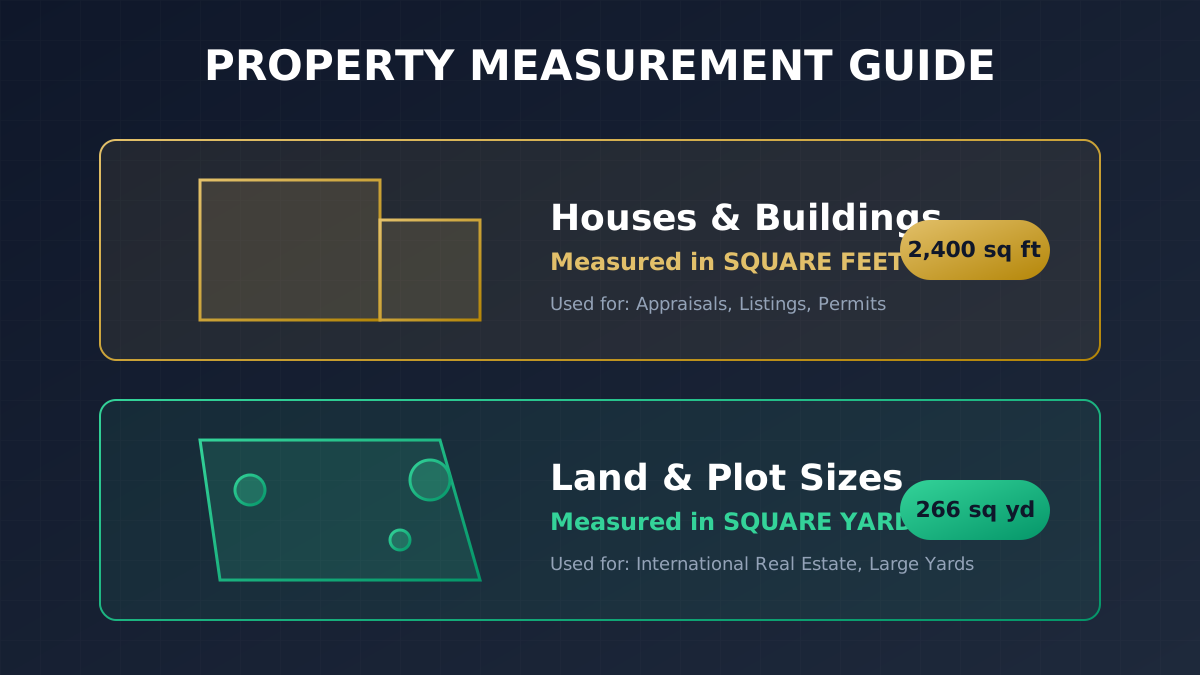
Figure 2: Square feet work best for houses and rooms. Square yards fit land plots, outdoor areas, and rolled materials.
Square Feet vs. Square Yards for Construction and Home Projects
Different materials and trades default to different units. Matching your measurement to the unit used in the product specification or contractor bid prevents ordering errors and pricing confusion.
Flooring and Carpet
Hard flooring products like tile, laminate, and hardwood are priced per square foot in the US market. Carpet, however, has a long history of pricing per square yard. Many carpet retailers still quote costs per square yard even when the showroom label shows square feet. If a carpet costs $32 per square yard, that equals $3.56 per square foot. Always check which unit the quote uses before comparing prices across suppliers.
Paint and Wall Areas
Paint coverage is universally listed in square feet. A standard gallon of interior paint covers 350 to 400 square feet per coat. Wall measurements for paint projects should always stay in square feet. Converting to square yards for a paint job adds unnecessary complexity with no practical benefit. Our paint area calculator produces all results in square feet to match manufacturer coverage labels.
Landscaping and Turf
Sod rolls, artificial turf, and landscape fabric are commonly sold by the square yard. A standard sod pallet covers about 50 to 60 square yards (450 to 540 square feet). When you measure your lawn in square feet, divide by 9 to convert to square yards before placing a sod order. This conversion ensures the delivery matches what the supplier counts per pallet.
Construction Materials
Concrete finishing, asphalt paving, and some excavation work quote area in square yards. A road resurfacing contract might specify 500 square yards of asphalt. Roofing, drywall, and insulation, by contrast, use square feet. The pattern comes down to industry history and the typical scale of each material application. When reading a bid document, note the unit before doing any math.
How to Choose Between Square Feet and Square Yards
Three simple guidelines cover nearly every situation. Once you internalize them, choosing the right unit becomes automatic.
Consider the Size of the Area
For areas under about 5,000 square feet, square feet usually produce more practical numbers. Above that threshold, square yards start yielding cleaner, shorter figures. A 10,000 square foot area becomes 1,111 square yards. Both are workable, but the smaller number is often easier to discuss and compare.
Consider the Industry or Project
Real estate, paint, tile, and most indoor trades default to square feet. Carpet, sod, fabric, and international land records default to square yards. When you start a project, check which unit your supplier, contractor, or governing body uses. Match your measurement to their standard.
Check Which Unit Is Used in the Quotation or Specification
Before doing any math, read the quote or spec carefully. A carpet quote at "$28 per square yard" means something very different from "$28 per square foot." A quick glance at the unit column saves you from a calculation error that could cost hundreds of dollars on a large order.
Converting Between Square Feet and Square Yards
When your measurement unit does not match the required unit, a quick conversion bridges the gap. The math is straightforward in both directions.
Square Feet to Square Yards
Divide the total square feet by 9. A living room measuring 270 square feet converts to 30 square yards. A 1,350 square foot area becomes 150 square yards. The formula never changes.
Square Yards to Square Feet
Multiply the total square yards by 9. A 50 square yard carpet order covers 450 square feet. A 300 square yard plot spans 2,700 square feet.
Why 1 Square Yard Equals 9 Square Feet
The factor 9 comes from squaring the linear relationship. One yard equals 3 feet. Area uses two dimensions. When you convert both the length and the width from feet to yards, each dimension divides by 3. The combined effect on area is 3 times 3, which gives 9. This is not an approximation. It is a mathematical identity. For a complete walkthrough with worked examples, see our guide on how to calculate square feet to square yards.
| Square Feet | Square Yards | Common Example |
|---|---|---|
| 9 | 1 | Small closet |
| 81 | 9 | Large bathroom |
| 120 | 13.33 | Standard bedroom |
| 200 | 22.22 | Master bedroom |
| 300 | 33.33 | Living room |
| 450 | 50 | Small apartment |
| 900 | 100 | Average apartment |
| 1,350 | 150 | Large condo |
| 1,800 | 200 | Residential plot (intl.) |
| 2,700 | 300 | Spacious home |
| 5,000 | 555.56 | Large home |
| 10,000 | 1,111.11 | Commercial lot |
Table: Common square feet to square yards conversions with real-world examples for quick reference.
Square Feet or Square Yards: Practical Examples
Seeing the unit choice in context makes the decision intuitive. Here are four scenarios you are likely to face.
Choosing a Unit for a Room
You measure a bedroom at 12 by 10 feet. That gives 120 square feet. You plan to install hardwood flooring priced at $6.50 per square foot. Your total material cost estimate is 120 multiplied by $6.50, which equals $780. Using square feet from measurement through purchase keeps every number aligned. Converting to 13.33 square yards would only add a step with no benefit.
Choosing a Unit for a House
Your home has a total livable area of 2,200 square feet. An appraiser values properties in your neighborhood at $195 per square foot. Your estimated property value is 2,200 multiplied by $195, giving $429,000. Every participant in this transaction, from the bank to the buyer, expects square feet.
Choosing a Unit for a Land Plot
A real estate listing in Lahore advertises a 250 square yard residential plot. You want to compare it against a 2,000 square foot lot in a different listing. Convert: 250 multiplied by 9 equals 2,250 square feet. Now you can compare directly. The 250 square yard plot is slightly larger.
Choosing a Unit for a Lawn or Outdoor Area
Your lawn measures 40 feet by 30 feet, giving 1,200 square feet. The sod supplier sells pallets covering 50 square yards each. Convert: 1,200 divided by 9 equals 133.33 square yards. You need 133.33 divided by 50, which rounds up to 3 pallets. Matching units to the supplier's format makes the order calculation straightforward.
Common Mistakes When Choosing an Area Unit
Unit errors are among the most expensive mistakes in measurement. These four traps catch beginners and experienced professionals alike.
Confusing Feet With Square Feet
Feet measure length. Square feet measure area. A room that is "12 feet" is 12 feet long in one direction. A room that is "120 square feet" covers a flat area equal to a 12 by 10 foot rectangle. Mixing these up leads to wildly incorrect material orders. Always confirm whether a number refers to a linear measurement or an area measurement.
Confusing Yards With Square Yards
The same confusion applies to yards. A carpet roll that is "4 yards long" describes a linear length. A carpet order for "40 square yards" describes a flat area. These are different quantities. A 4-yard-long roll that is 12 feet wide covers 4 multiplied by 4 (since 12 feet equals 4 yards), giving 16 square yards, not 4.
Mixing Different Area Units in the Same Calculation
Adding 500 square feet to 50 square yards without converting gives you a meaningless total. Before combining areas measured in different units, convert everything to a single unit. The most common version of this mistake occurs when one room was measured in square feet and another was quoted in square yards by a different source.
Using the Wrong Unit When Estimating Materials
Ordering 200 square feet of sod when you need 200 square yards delivers one ninth of the required material. Ordering 200 square yards of tile when you need 200 square feet delivers nine times more than necessary. Both mistakes are costly. Always verify the unit in the product specification before placing an order.
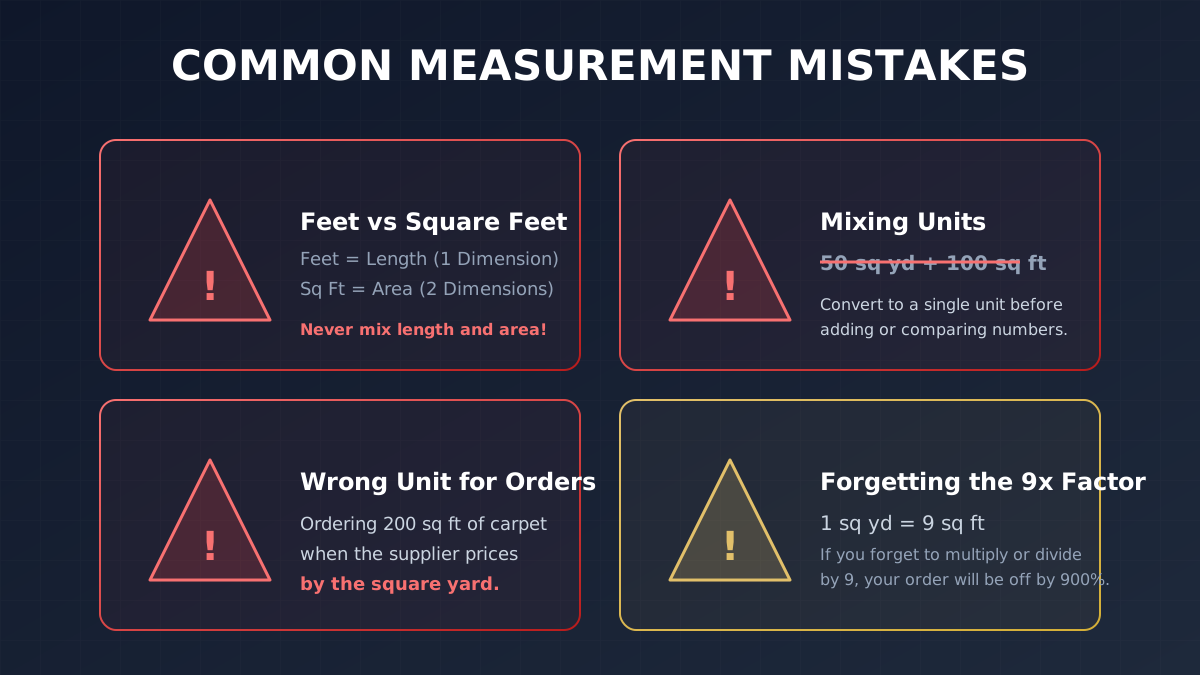
Figure 3: Double-check the unit in every quote and specification. One wrong unit choice can multiply material costs by 9.
Common Mistakes to Avoid
WarningFrequently Asked Questions
Is Square Feet Bigger Than Square Yards?
No. A square yard is the larger unit. One square yard covers 9 square feet of area. A 100 square foot room equals only 11.11 square yards. The square yard always represents a bigger area than a single square foot.
Is Square Yard the Same as Square Feet?
No. They measure the same physical quantity (area), but they use different scales. You must multiply or divide by 9 to convert between them. Treating them as identical will cause incorrect calculations.
Which Is Better for Measuring a House, Square Feet or Square Yards?
Square feet. Every real estate listing, appraisal report, building permit, and insurance document in the US uses square feet for house measurements. Square feet produce practical three-to-four-digit numbers for most homes, making comparisons easy.
Which Unit Is Commonly Used for Land Measurements?
It depends on your region. Square yards are standard for land in India, Pakistan, and parts of the Middle East. Acres and square feet are more common in the United States. Always check which unit your local land registry or real estate market uses.
Can Square Feet and Square Yards Be Used Interchangeably?
Only after converting. Both express area, so any measurement can be stated in either unit. However, you must apply the conversion factor of 9 every time you switch. Using one in place of the other without converting is a common and costly error.
How Many Square Feet Are in 1 Square Yard?
Exactly 9. One yard is 3 feet, and a square yard covers 3 feet by 3 feet. That gives 9 square feet per square yard.
How Many Square Yards Are in 1 Square Foot?
One square foot equals 0.1111 square yards (one ninth). Divide 1 by 9 to get the exact value. A single square foot is a small fraction of a square yard.
How Do You Convert Square Feet to Square Yards?
Divide by 9. Take your area in square feet and divide by 9 to get the equivalent area in square yards. For example, 630 square feet divided by 9 equals 70 square yards.
How Do You Convert Square Yards to Square Feet?
Multiply by 9. Take your area in square yards and multiply by 9 to get the equivalent in square feet. For example, 25 square yards multiplied by 9 equals 225 square feet.
Choosing between square feet and square yards is not about which unit is better in absolute terms. It is about which unit fits your project, your region, and the industry you are working with. Match your measurement to the unit your supplier, contractor, or market expects. When you need to switch, remember the factor of 9. Divide square feet by 9 to get square yards. Multiply square yards by 9 to get square feet. That single number connects the two units and keeps your calculations accurate across every project. If you want instant conversions without manual math, use our square feet to square yards calculator to verify your numbers in seconds.