A contractor in Denver once ordered 288,000 square inches of hardwood flooring for a client's living room. The supplier paused, confused by the number. The contractor meant 2,000 square feet. That single unit mix-up delayed the project by three days and nearly cost the client an extra delivery charge. Choosing the right area unit before you start measuring prevents exactly this kind of headache. Square feet and square inches both measure area, but each one fits certain tasks far better than the other. This guide walks you through when to reach for each unit, how they connect, and how to avoid the mistakes that trip up even experienced professionals.
Every measurement project starts with a choice of unit. Get that choice right, and your numbers stay clean, your material orders land on target, and your communication with suppliers stays clear. Our square footage from inches calculator handles conversions instantly, but understanding the reasoning behind unit selection gives you an edge that no calculator can replace.
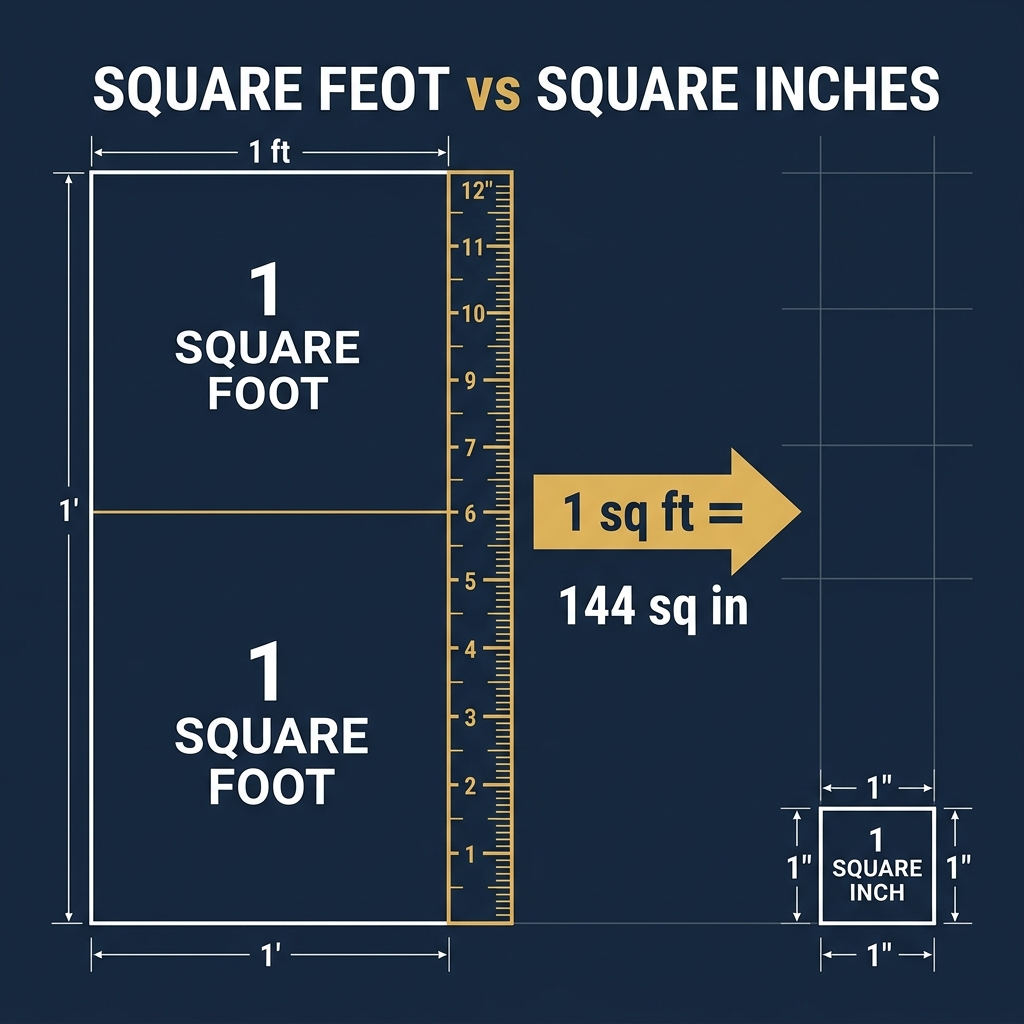
One square foot contains exactly 144 square inches. Choosing the right unit depends on the size of the area you are measuring.
What Is the Difference Between Square Feet and Square Inches?
Both square feet and square inches measure two-dimensional area, but they operate at different scales. Think of it like choosing between miles and yards for distance. Both work, but one fits long road trips while the other fits football fields. The same logic applies to area units.
What Is a Square Foot?
A square foot is the area inside a square that measures one foot (12 inches) on each side. It equals 144 square inches. Builders, real estate agents, flooring installers, and architects use square feet as their default area unit for rooms, houses, commercial spaces, and most construction projects. When someone says a house is 1,500 square feet, they describe the total livable floor area using this unit.
What Is a Square Inch?
A square inch is the area inside a square that measures one inch on each side. It is a much smaller unit than a square foot. Engineers, product designers, tile manufacturers, and screen makers commonly use square inches to describe small surfaces. A standard business card, for example, covers about 21 square inches.
How Are Square Feet and Square Inches Related?
The two units connect through a simple conversion factor. Because one foot equals 12 inches, one square foot equals 12 times 12, which is 144 square inches. This relationship works in both directions. Multiply square feet by 144 to get square inches. Divide square inches by 144 to get square feet.
1 Square Foot = 144 Square Inches
Visual GuideEach small cell = 1 square inch
When Should You Use Square Feet to Measure Area?
Square feet are the standard choice for most residential, commercial, and construction measurements in the United States. The unit keeps numbers manageable when you work with larger spaces, and nearly every material supplier, contractor, and building code references area in square feet.
Measuring Rooms and Floors
Room dimensions naturally fall into the square foot range. A standard bedroom might measure 10 feet by 12 feet, giving you 120 square feet. Expressing that as 17,280 square inches would be accurate but impractical for comparing rooms, ordering materials, or discussing plans with a contractor. When you calculate the area of a room, square feet is always the cleaner choice.
Measuring Houses and Buildings
Real estate listings, building permits, insurance documents, and property tax records all use square feet. A 2,200 square foot home translates to 316,800 square inches. No buyer, agent, or appraiser wants to work with six-digit area numbers. Square feet keep property comparisons practical and straightforward.
Measuring Large Surfaces and Spaces
Driveways, patios, decks, and commercial warehouse floors all produce areas in the hundreds or thousands of square feet. Using square inches for these surfaces creates numbers so large that mental math becomes impossible and spreadsheet errors multiply. Square feet maintain readability across all large-area projects.
Measuring Flooring and Carpeting
Flooring retailers sell by the square foot. Carpet rolls list coverage in square feet. Laminate boxes specify square feet per carton. Hardwood pricing sits at dollars per square foot. The entire flooring industry operates in square feet, so your measurements should match. Using square inches here forces an extra conversion step that introduces error risk. If you need help with flooring square footage calculations, the process becomes much simpler when you stay in square feet from the start.
When Should You Use Square Inches to Measure Area?
Square inches become the better choice when the area you measure falls well below one square foot. For small objects, individual material pieces, and precision work, square inches provide whole numbers that are easier to read, compare, and calculate with.
Measuring Small Surfaces
Phone screens, book covers, photo prints, and laptop trackpads all have areas measured most naturally in square inches. A standard 4 by 6 inch photo covers 24 square inches. Calling that 0.167 square feet adds confusion without adding value. Square inches keep small-surface measurements intuitive.
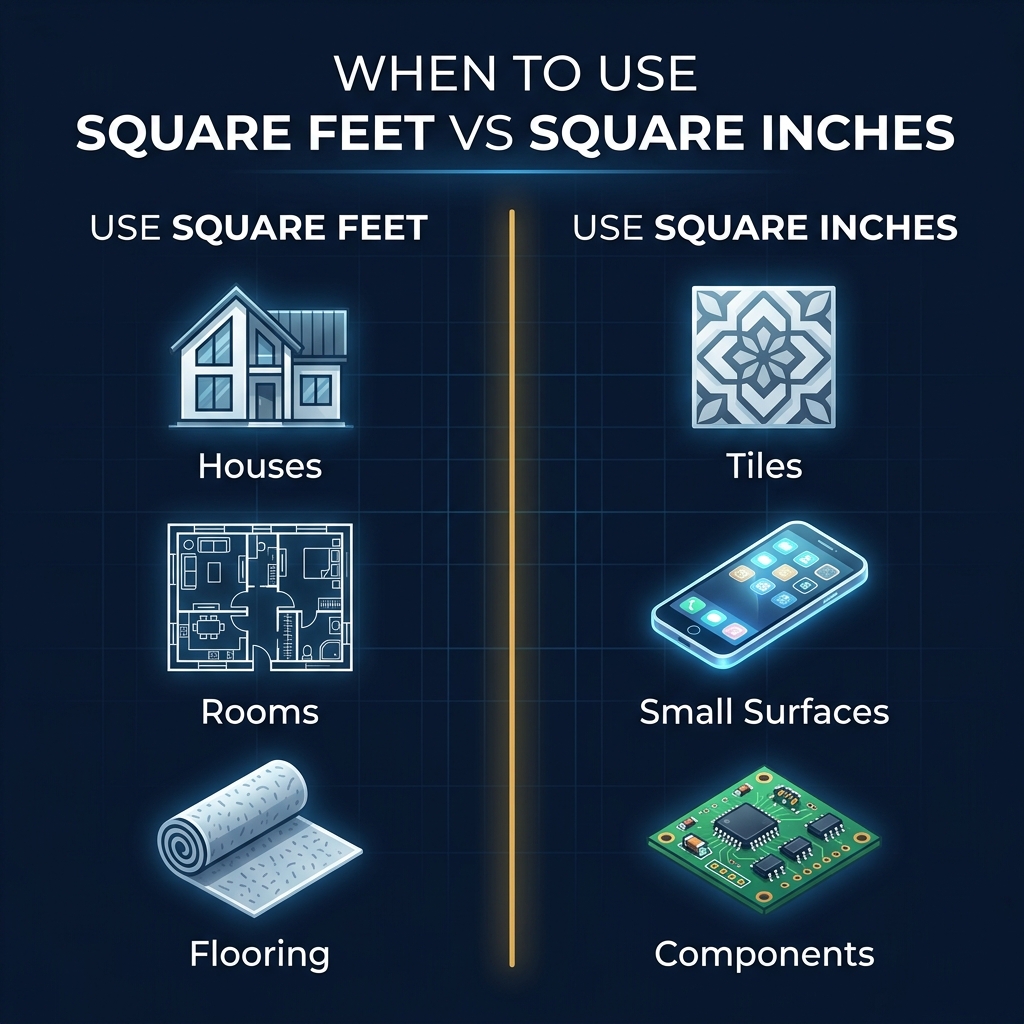
Square feet suit rooms, houses, and flooring. Square inches work best for tiles, small surfaces, and precision components.
Measuring Tiles and Individual Materials
Tile dimensions appear in inches on the label: 6 by 6, 12 by 12, 4 by 8, and so on. When you calculate how many tiles fit in a row or need to cut a tile to size, working in inches keeps fractions simple. You might still convert the total floor area to square feet for the purchase order, but the tile-level math stays in square inches.
Measuring Small Objects and Components
Circuit boards, gaskets, fabric patches, stickers, and labels all have areas best described in square inches. A 3 by 5 inch circuit board covers 15 square inches. Engineers and manufacturers quote material needs, heat dissipation ratings, and adhesive coverage in square inches for these items.
Working With Precise Small-Area Measurements
When precision matters for areas under one square foot, square inches eliminate awkward decimals. An area of 0.35 square feet translates to 50.4 square inches. The second number is easier to measure with a ruler, easier to verify, and less likely to cause a rounding error during fabrication.
Size Comparison: Common Objects
InteractiveWhich Unit Is Better for Small Areas?
For areas smaller than about two square feet, square inches almost always produce cleaner, more practical numbers. The threshold is not absolute, but a good rule of thumb is this: if your area in square feet produces a decimal with more than one digit after the point, square inches will be easier to work with.
Why Square Inches Are More Practical for Small Surfaces
Small surfaces measured in square feet produce fractions or long decimals. A 5 by 7 inch photo frame opening covers 35 square inches or 0.243 square feet. The first number is immediately useful. The second requires mental effort to interpret and introduces rounding risk during calculations. For craft projects, electronics work, or product design, square inches keep the math accessible.
When Square Feet May Be More Convenient
Even for smaller areas, square feet might make sense if every other measurement in your project uses square feet. A bathroom vanity countertop at 4 square feet fits naturally alongside the 40 square foot bathroom floor measurement. Consistency within a project sometimes outweighs the precision advantage of square inches.
Which Unit Is Better for Large Areas?
Square feet dominate large-area measurements for good reason. The numbers stay in a range that humans can quickly grasp, compare, and calculate with. Once your area exceeds a few square feet, square inches create unwieldy numbers that slow down every step of a project.
Why Square Feet Are More Practical for Large Spaces
A 15 by 20 foot living room equals 300 square feet. That number fits comfortably in a conversation, a spreadsheet cell, or a material order form. The same room in square inches comes to 43,200. Comparing two rooms at 300 versus 250 square feet takes a glance. Comparing 43,200 versus 36,000 square inches takes a pause. For large spaces, square feet reduce cognitive load at every step.
Why Square Inches Can Become Difficult to Use for Large Areas
The multiplication factor of 144 means large-area numbers explode quickly in square inches. A modest 1,200 square foot apartment becomes 172,800 square inches. A 5,000 square foot commercial space becomes 720,000 square inches. Numbers at this scale are hard to type, hard to verify, and easy to get wrong by a factor of ten.
How Do You Choose the Right Area Unit for a Project?
Choosing the right unit comes down to four practical considerations. Apply these to any measurement task, and you will pick the correct unit every time.
Consider the Size of the Area
If the area is larger than about two square feet, use square feet. If it is smaller than about one square foot, use square inches. Areas between one and two square feet can go either way depending on the context. This size-based rule handles the majority of everyday decisions.
Consider the Type of Measurement
Some measurements have industry conventions that override size logic. Flooring, roofing, and real estate always use square feet regardless of the specific area involved. Screen sizes, circuit board layouts, and label printing always use square inches. Following the convention of your field prevents miscommunication.
Unit Selection Decision Guide
FlowchartUse the Unit Commonly Used for the Material or Project
Check how your materials are sold before you measure. Paint coverage is listed per square foot. Fabric is sold by the square yard (which converts easily from square feet). Screen protectors list dimensions in inches. Matching your measurement unit to the sales unit eliminates an entire conversion step and the errors that come with it.
Keep All Measurements in the Same Unit
Mixing units within a single project is the fastest route to mistakes. If your room dimensions are in square feet, keep your closet, hallway, and bathroom in square feet as well. If you are designing a circuit board layout in square inches, keep all component areas in square inches. Converting everything to one unit at the start saves time and prevents costly mix-ups later.
Square Feet vs. Square Inches for Common Measurements
Here is how the two units compare across the most common measurement tasks you will encounter in home improvement, construction, and everyday projects.
Rooms and House Areas
Rooms and houses are always measured in square feet. A bedroom at 12 by 14 feet equals 168 square feet. A three-bedroom house might total 1,800 square feet. These numbers are immediately comparable and match every real estate listing, building code, and insurance form you will encounter.
Area Comparison Table
Reference| Item | Square Feet | Square Inches | Better Unit |
|---|---|---|---|
| Bedroom (12x14 ft) | 168 | 24,192 | Sq Ft |
| Kitchen Floor (10x12 ft) | 120 | 17,280 | Sq Ft |
| Floor Tile (12x12 in) | 1.0 | 144 | Both |
| Phone Screen (6x3 in) | 0.125 | 18 | Sq In |
| Business Card (3.5x2 in) | 0.049 | 7 | Sq In |
| House (2,000 sq ft) | 2,000 | 288,000 | Sq Ft |
Flooring and Carpeting
Flooring is purchased, installed, and warranted by the square foot. Whether you choose hardwood, laminate, vinyl plank, or carpet, the measurement standard across the industry is square feet. Converting to square inches at any stage adds unnecessary complexity to your material order.
Tiles and Wall Surfaces
Individual tiles use inch dimensions on the box. A 6 by 6 inch tile covers 36 square inches or 0.25 square feet. You measure the wall or floor area in square feet, then use the tile's square inch area to calculate how many you need. Both units serve a purpose at different stages of the same tiling project.
Furniture and Small Surfaces
Desk surfaces, shelf tops, and countertop sections can go either way. A 24 by 48 inch desk surface is 1,152 square inches or 8 square feet. Both numbers are usable. Choose the unit that matches the rest of your project measurements.
Construction and Building Materials
Plywood, drywall, insulation, and roofing materials are sold and specified in square feet. A 4 by 8 foot sheet of plywood covers 32 square feet. Ordering in square inches would confuse every supplier in the chain and slow down your project.
Why Does the Choice of Area Unit Matter?
The wrong unit does not change the physical area, but it changes how easily you work with the numbers. Practical consequences include ordering errors, communication failures, and wasted time on unnecessary conversions.
Avoiding Confusingly Large or Small Numbers
A kitchen backsplash at 18 square feet is easy to discuss. The same backsplash at 2,592 square inches creates a moment of hesitation every time someone reads the number. Conversely, a sticker at 6 square inches is instantly clear, while 0.042 square feet requires a calculator to interpret. Matching unit to scale keeps numbers in a human-friendly range.
Making Measurements Easier to Compare
Comparing two rooms at 150 and 200 square feet takes one second. Comparing them at 21,600 and 28,800 square inches takes longer and introduces more chance of error. Similarly, comparing two tile sizes at 36 and 64 square inches is faster than comparing 0.25 and 0.44 square feet. The right unit makes comparisons instant.
Reducing Unit Conversion Errors
Every conversion step is a chance for error. If your tape measure reads feet and your supplier quotes square feet, no conversion is needed. If you measure in inches but order in square feet, you must remember to divide by 144, not by 12. This distinction between linear and area conversion is one of the most common square footage mistakes people make.
Matching Measurements With Material Specifications
Materials come with coverage specifications in a fixed unit. Paint covers 350 to 400 square feet per gallon. Tile adhesive covers a certain number of square feet per bucket. If your measurements use the same unit as the product specification, you can calculate material quantities directly without conversion.
Can You Switch Between Square Feet and Square Inches?
Yes. The conversion is straightforward in both directions. The key number to remember is 144, which comes from squaring the linear conversion factor of 12 inches per foot.
Converting Square Feet to Square Inches
Multiply the number of square feet by 144. For example, 3.5 square feet equals 3.5 times 144, which is 504 square inches. Our square feet to square inches conversion guide covers the formula in full detail with worked examples.
Converting Square Inches to Square Feet
Divide the number of square inches by 144. For example, 720 square inches divided by 144 equals 5 square feet. This conversion is essential when you measure small pieces in inches but need a total area in square feet for ordering.
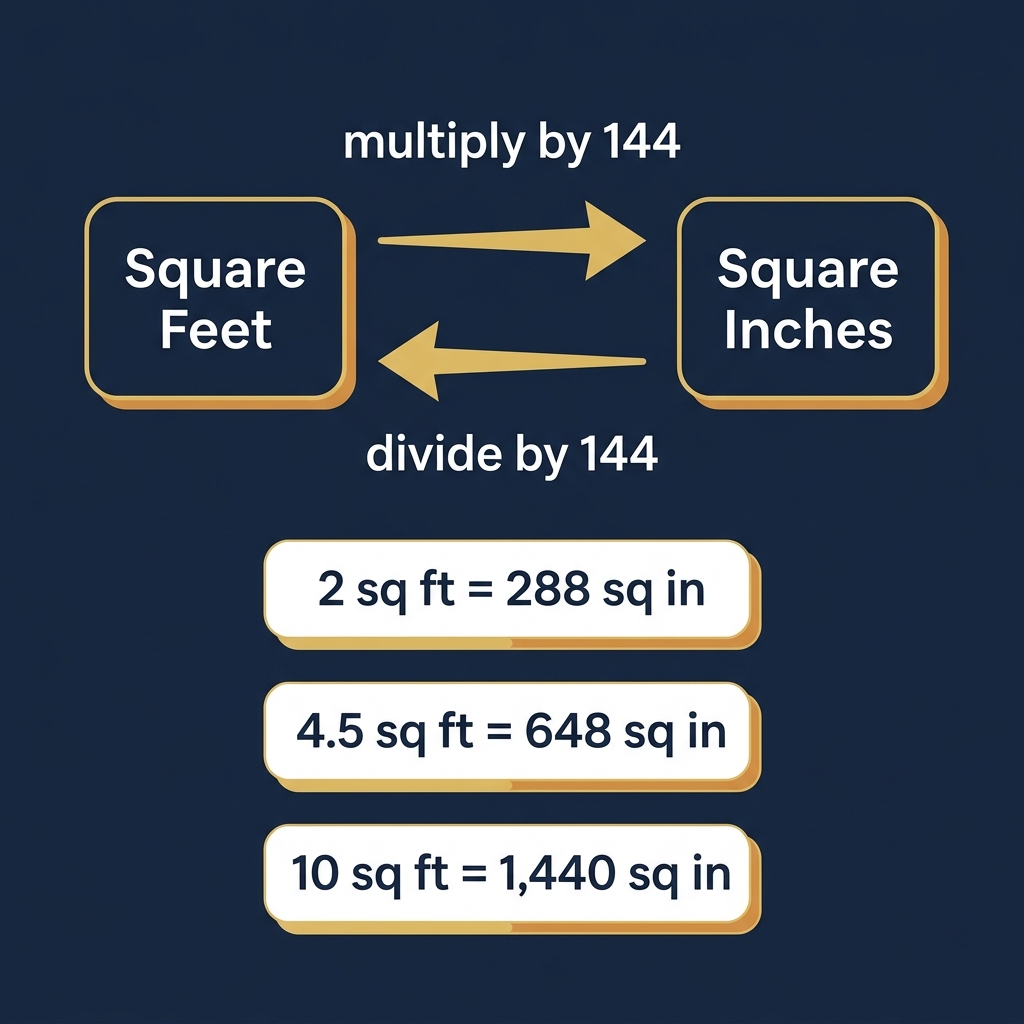
Convert between square feet and square inches using the factor of 144. Multiply to go from sq ft to sq in. Divide to go the other way.
When Conversion Is Necessary
Conversion becomes necessary when your measurement tool uses one unit and your material supplier uses another. It also applies when you combine measurements taken at different scales, such as adding a small tiled niche area (measured in square inches) to a larger floor area (measured in square feet). Always convert to one common unit before adding areas together.
Quick Conversion Reference
ReferenceWhat Common Mistakes Should You Avoid When Choosing an Area Unit?
Four mistakes appear repeatedly in projects that involve area measurements. Catching them early saves time, money, and frustration.
Confusing Inches With Square Inches
Inches measure length. Square inches measure area. A board that is 6 inches wide is not 6 square inches. You need both the width and the length to calculate area. Saying "I need 48 inches of tile" when you mean "I need 48 square inches of tile" can lead to a completely wrong order.
Confusing Feet With Square Feet
The same confusion applies at the foot level. A room that is 10 feet long is not 10 square feet. A 10 by 12 foot room is 120 square feet. Linear measurements and area measurements are fundamentally different, and confusing them is a mistake that compounds across every calculation in your project.
Mixing Different Area Units
Adding 200 square feet and 500 square inches without converting first produces a meaningless number. You must convert one value to match the other before combining them. In this case, 500 square inches equals 3.47 square feet, so the total area is 203.47 square feet.
Choosing an Unnecessarily Large or Small Unit
Measuring a closet shelf in square feet when it is 6 by 18 inches creates an awkward 0.75 square foot figure. Measuring an entire house floor in square inches creates a six-digit number. Neither situation helps the project. Match the unit to the scale to keep numbers practical and readable.
Mistakes to Avoid
WarningFrequently Asked Questions About Square Feet and Square Inches
Is it better to use square feet or square inches for measuring a room?
Square feet work best for rooms. A typical bedroom measures 120 to 200 square feet. Expressing that area in square inches would produce numbers above 17,000, making comparisons difficult and material estimates harder to verify.
Should flooring be measured in square feet or square inches?
Flooring should be measured in square feet. Every major flooring retailer, contractor, and product specification lists coverage in square feet. Staying in this unit eliminates conversion steps and keeps your order accurate.
Are square inches better for measuring tiles?
Individual tile dimensions use inches, such as 12 by 12 or 6 by 8. However, the total coverage area for ordering purposes is expressed in square feet. You use both units at different stages of a tile project, but square inches handle the per-tile math best.
Can the same area be expressed in both square feet and square inches?
Yes. Multiply square feet by 144 to convert to square inches. Divide square inches by 144 to convert to square feet. The physical area remains the same regardless of which unit you choose to describe it.
Which unit is easier to use for large areas?
Square feet are far easier for large areas. A 2,000 square foot home equals 288,000 square inches. The smaller number in square feet is simpler to communicate, compare, and use in budget calculations.
Which unit is better for measuring small surfaces?
Square inches are better for small surfaces. A phone screen, a label, or a tile has an area naturally expressed in square inches. Using square feet for these items would produce tiny decimals that are harder to interpret and compare.
Why are square feet commonly used for houses?
The real estate industry, building codes, insurance companies, and property tax assessments all standardize on square feet. This universal adoption makes it the only practical choice for describing residential and commercial property area.
Why are square inches useful for small measurements?
Square inches provide clean, whole numbers for small areas. A 4 by 6 inch photo covers 24 square inches. Expressing that as 0.167 square feet adds unnecessary complexity without adding any practical value.
Choosing the right area unit comes down to common sense and consistency. Use square feet for rooms, floors, houses, and any large-area project. Use square inches for tiles, screens, labels, and small surfaces. When in doubt, match the unit your materials are sold in. And if you ever need a fast conversion between the two, our area calculator handles it in a single click.