Painting a ceiling is physically demanding work against gravity with rollers on extension poles. Getting your paint estimate wrong creates immediate headaches. Buy too little paint, and your wet edge dries while you rush back to the hardware store. That leaves visible lap marks across your ceiling. Buy too much, and you waste money on specialized flat ceiling paint that you cannot use on walls or trim.
I learned this lesson during a home renovation in Austin. I estimated a living room ceiling from the floor footprint and grabbed a single gallon can. Halfway through the second coat, my roller ran completely dry. The resulting lap mark forced me to repaint the entire ceiling. That mistake cost four extra hours and another $45 gallon of paint.
This comprehensive guide teaches you how to calculate paint needed for a ceiling with mathematical precision. You will learn the exact formulas, texture adjustments, coat multipliers, and coverage differences for gallons, quarts, and liters. Test your room dimensions right now using our paint area calculator or our tool to calculate square feet for paint.
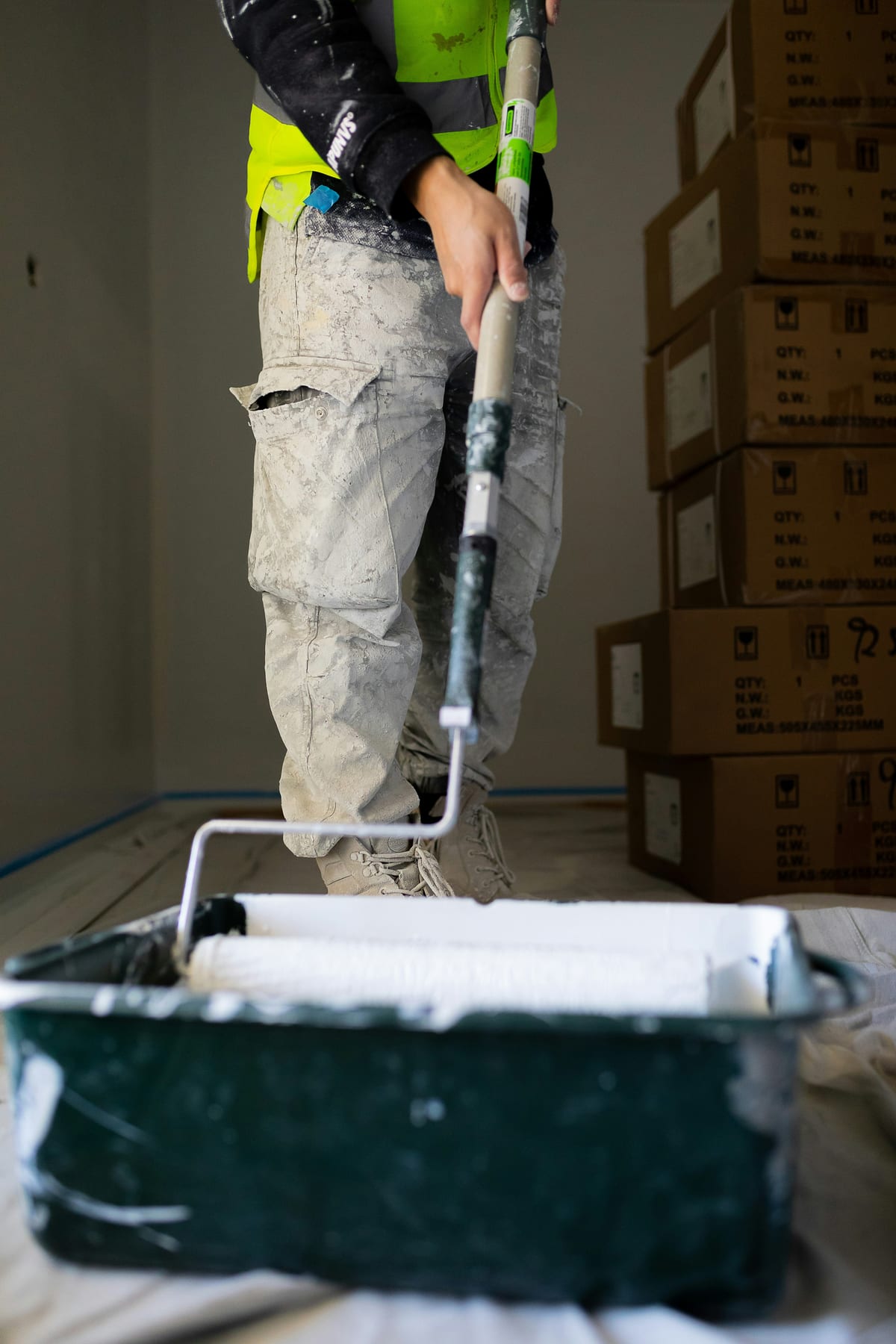
Figure 1: Using an extension pole with a loaded paint roller and roller tray enables uniform ceiling paint application from the floor without ladders.
How Much Paint Do You Need for a Ceiling?
Determining how much paint you need requires three numbers: total surface area, paint spread rate, and coat count. Most standard flat ceilings take one to two gallons. Small powder rooms need only one quart. Large great rooms require three gallons or more.
Ceiling Area and Paint Quantity
Ceiling area directly dictates liquid paint volume. A flat rectangular ceiling area equals length multiplied by width. A 12 by 15 foot room covers 180 square feet.
Factors That Affect Ceiling Paint Requirements
Surface texture, substrate porosity, and roller nap size alter real paint consumption. Dry drywall compound absorbs liquid rapidly like a sponge.
Number of Paint Coats
The number of coats is your primary multiplier. Two coats double the liquid volume required.
Ceiling Paint Calculation Formula
Calculating ceiling paint relies on simple mathematical steps. The sequence moves from raw room dimensions to surface area, divides by product spread rate, and multiplies by coat count.
Calculate Ceiling Area
First calculate the flat surface plane of the ceiling. For standard rectangular and square rooms, multiply length by width.
Calculate Paint Needed From Coverage
Divide your total square footage by the paint coverage rate. Standard ceiling paints cover 350 to 400 square feet per gallon.
Account for Multiple Coats
Multiply single coat gallon volume by the total number of coats you plan to apply.
Basic Ceiling Paint Formula
Combine all variables into one master estimation equation for any ceiling project.
Input your room dimensions and texture profile to calculate precise paint cans needed.
Measurements Needed to Calculate Ceiling Paint
Accurate paint estimates require four reliable data inputs. You can capture all necessary dimensions safely from the floor without climbing ladders.
Ceiling Length
Ceiling length represents the longest horizontal span of the room. Measure along the baseboard from corner to corner using a steel tape or a digital laser measure like the Bosch GLM 50 C. Because vertical walls run parallel, floor length equals ceiling length in standard flat rooms.
Ceiling Width
Ceiling width represents the shorter horizontal span perpendicular to length. Measure across the room between opposing baseboards.
Paint Coverage per Gallon
Check the spread rate on your paint can label. Premium paints like Benjamin Moore Waterborne Ceiling Paint cover 400 square feet per gallon on sealed drywall.
Number of Coats
Inspect existing ceiling conditions to select coat count. One coat works when refreshing the same clean white shade.
Step-by-Step Ceiling Paint Calculation
Follow this five step procedure on any residential ceiling painting project. Breaking calculations into clear stages eliminates mistakes and extra store visits.
Step 1: Measure the Ceiling
Clear floor obstructions and measure the room length and width along the baseboards. Note both measurements in decimal feet. For example, consider a family dining room measuring 16 feet in length and 13 feet in width.
Step 2: Calculate the Ceiling Area
Multiply length by width to find total square footage. For our dining room example, 16 feet multiplied by 13 feet produces 208 square feet.
Step 3: Check the Paint Coverage
Read the spread rate on your selected paint container. Using Sherwin-Williams Eminence Ceiling Paint at 350 square feet per gallon, divide 208 square feet by 350.
Step 4: Determine the Number of Coats
Assess natural window lighting across the ceiling plane. Dining rooms with bright windows require two coats to prevent lap lines.
Step 5: Calculate the Total Paint Needed
Add a 10 percent margin for roller sleeve retention and edge cutting. Multiplying 1.18 gallons by 1.10 equals 1.30 gallons.
Ceiling Paint Coverage
Paint is packaged in standard retail container sizes. Understanding how each container size maps to ceiling surface area prevents overspending and mid-project shortages.
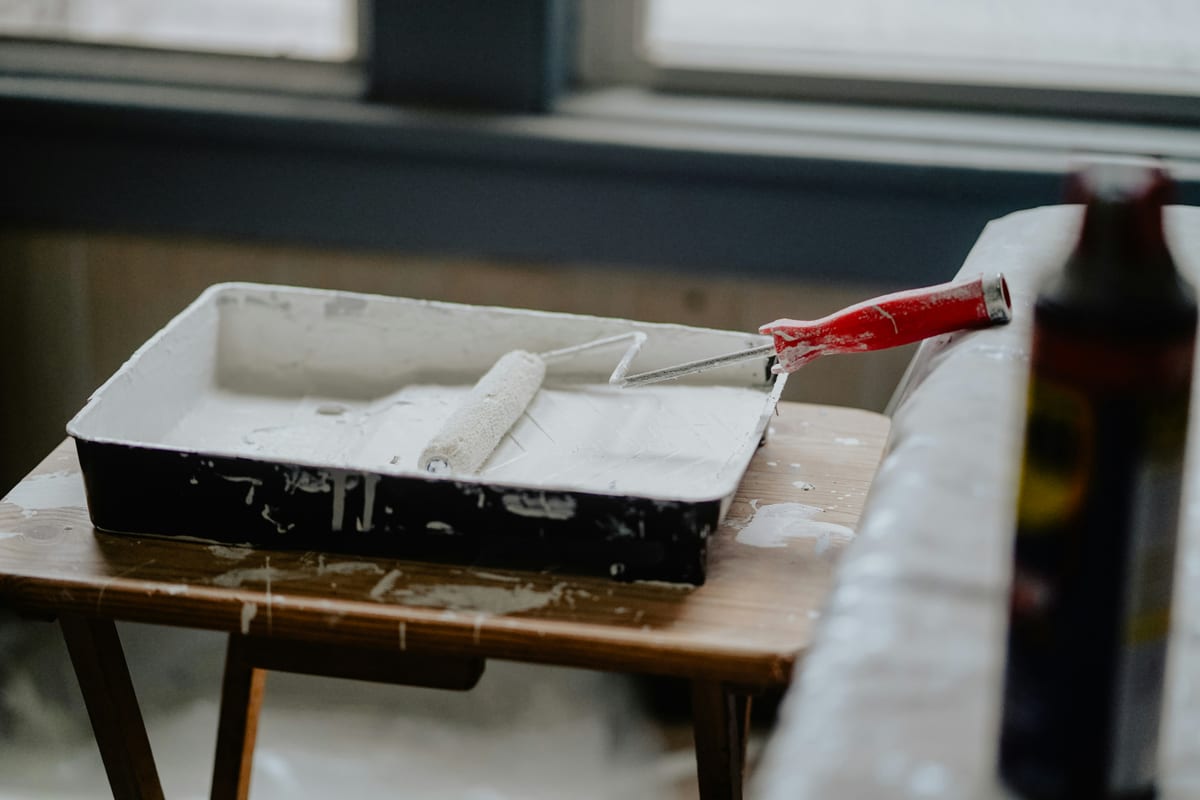
Figure 2: Loading roller naps evenly from a white ceiling paint tray prevents excess dripping and ensures smooth, consistent coverage.
Coverage per Gallon
One United States gallon equals 128 fluid ounces or 3.785 liters. On a smooth previously painted ceiling, one gallon covers 350 to 400 square feet for one coat, or 175 to 200 square feet for two coats. On rough popcorn texture, coverage drops to 200 to 250 square feet.
Coverage per Quart
One quart equals 32 fluid ounces or one fourth of a gallon. A quart covers 85 to 100 square feet for one coat, or 40 to 50 square feet for two coats.
Coverage per Liter
In metric markets across Canada, Britain, and Australia, paint sells in liters and 5 liter tins. One liter covers approximately 10 square meters per coat on smooth drywall.
Why Actual Coverage Can Vary
Can labels state ideal laboratory coverage rates. Real world application varies based on roller nap thickness, drywall porosity, and room temperature.
Ceiling Paint Needed for Different Room Sizes
Standard residential room dimensions make paint planning straightforward. Here is the exact liquid paint volume required for five common room sizes based on two finish coats at 350 square feet per gallon.
Paint for a 10 × 10 Ceiling
A 10 by 10 foot bedroom ceiling equals 100 square feet. One coat requires 0.29 gallons. Two coats require 0.57 gallons, which equals 2.3 quarts.
Paint for a 10 × 12 Ceiling
A 10 by 12 foot ceiling covers 120 square feet. One coat takes 0.34 gallons.
Paint for a 12 × 12 Ceiling
A 12 by 12 foot room covers 144 square feet. A single coat uses 0.41 gallons.
Paint for a 12 × 15 Ceiling
A 12 by 15 foot master bedroom ceiling measures 180 square feet. One coat uses 0.51 gallons.
Paint for a 15 × 20 Ceiling
A 15 by 20 foot living room covers 300 square feet. One coat uses 0.86 gallons.
Ceiling Paint Calculation Examples
Walking through practical examples clarifies how mathematical formulas translate into physical paint cans. These scenarios demonstrate how area and coverage rates interact.
Example: 100 Square Foot Ceiling
A guest bedroom measures 10 feet by 10 feet, giving 100 square feet. At 350 square feet per gallon, divide 100 by 350 to find 0.286 gallons per coat. One quart provides 0.25 gallons and falls slightly short.
Example: 144 Square Foot Ceiling
A home office measures 12 feet by 12 feet, creating 144 square feet. Dividing 144 by 350 square feet gives 0.411 gallons per coat.
Example: 200 Square Foot Ceiling
A family room measures 14 feet by 14.3 feet, yielding 200 square feet. One coat requires 0.571 gallons.
Example With Two Coats
Suppose you have a 250 square foot basement ceiling. One coat takes 250 divided by 350, or 0.714 gallons.
Example With Different Paint Coverage
Painting a 240 square foot ceiling with premium Benjamin Moore Waterborne Ceiling Paint rated at 400 square feet per gallon uses 0.60 gallons per coat, or 1.20 gallons for two coats. Economy paint rated at 300 square feet per gallon requires 1.60 gallons for that same ceiling.
Calculating Paint for Different Ceiling Shapes
Not all residential ceilings are flat horizontal rectangles. Roof lines and architectural layouts introduce unique geometric challenges. For complex floor plans, you can reference our wall and ceiling square footage guide or explore our room square footage calculator.
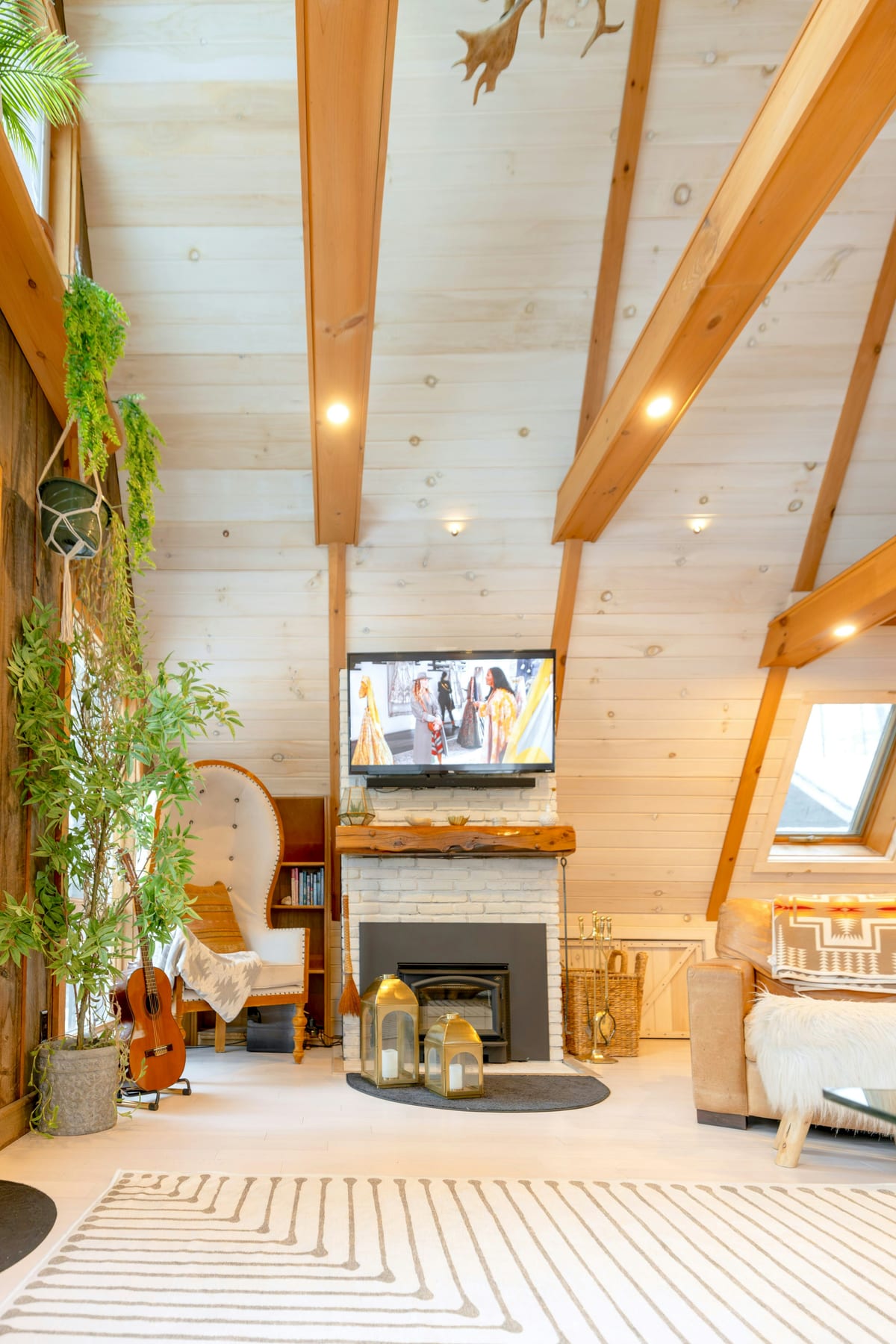
Figure 3: Sloped and vaulted cathedral ceilings have greater surface area than flat floor footprints, requiring pitch multiplier calculations.
Rectangular Ceilings
Rectangular ceilings are the most common shape. Measure length and width along perimeter walls, multiply the two numbers, and divide by paint coverage. Measure both opposing walls to ensure room corners sit square at 90 degrees.
Square Ceilings
Square ceilings have four identical wall dimensions. Measure one wall and square that number.
Irregular-Shaped Ceilings
L-shaped and T-shaped rooms must be divided into smaller rectangular blocks. Measure the length and width of each block separately.
Vaulted or Sloped Ceilings
Vaulted and cathedral ceilings have more surface area than the floor beneath them because they slope upward. A 6/12 pitch roof adds a 1.118 multiplier to floor area.
Ceiling Paint for Different Units
Depending on your geographic location or architectural plans, measurements may arrive in imperial feet or metric units. Converting between units ensures you purchase the correct paint volume.
Calculating Ceiling Paint in Square Feet
Imperial calculations use feet and inches. Multiply length by width in feet to obtain square feet. Divide by 350 to find single coat gallons.
Calculating Ceiling Paint in Square Meters
In metric regions, measure ceiling dimensions in meters. A room measuring 4.5 by 3.6 meters covers 16.2 square meters.
Converting Square Meters to Square Feet
To convert square meters to square feet, multiply square meters by 10.7639. A 20 square meter ceiling equals 215.3 square feet.
Factors That Can Increase Ceiling Paint Requirements
Unexpected surface conditions frequently cause paint shortages. Failing to account for texture, porosity, and deep color shifts can leave your ceiling unfinished before you run out of paint.
Textured Ceilings
Textured finishes like popcorn, knockdown, and orange peel expand surface area by 20 to 35 percent. Every bump and crevice absorbs extra liquid. Use thick 1/2 inch or 3/4 inch nap rollers like the Purdy Colossus and add 25 percent more paint.
Porous Ceiling Surfaces
Bare drywall and fresh joint compound patches absorb paint binders rapidly. Unsealed drywall mud reduces first coat coverage from 350 square feet down to 220 square feet per gallon.
Dark Colors and Color Changes
Covering a dark ceiling, bold color, or nicotine stained surface requires extra paint thickness. Deep colors bleed through single finish coats.
Primer and First-Coat Coverage
Using a standalone primer like Zinsser Bulls Eye 1-2-3 or Kilz 2 All-Purpose seals the surface and establishes uniform suction. Primer protects expensive ceiling paint and ensures topcoats achieve full 350 to 400 square foot coverage.
Higher Number of Coats
Three coats are sometimes required in rooms with tall south-facing windows. Strong daylight rakes across the ceiling plane and highlights minor lap marks.
Common Ceiling Paint Calculation Mistakes
Homeowners make the same five estimation mistakes repeatedly. Avoiding these traps saves money, prevents extra store trips, and guarantees a uniform ceiling finish. You can also review how many square feet a gallon of paint covers and our guide on how to calculate paintable square footage.
Using Floor Area Incorrectly
Assuming floor area always equals ceiling area fails in rooms with sloped roofs, tray ceilings, or coffered beams. Sloped ceilings exceed floor footprints by 15 to 40 percent. Always measure the actual ceiling plane rather than floor boards.
Forgetting the Number of Coats
The most frequent error is calculating area and buying paint for only one coat. When the first coat dries with roller shadows, a second coat becomes mandatory.
Using the Wrong Coverage Rate
Relying on optimistic can claims of 400 square feet per gallon often causes paint shortages. In real rooms, application losses reduce coverage to 320 to 350 square feet.
Ignoring Ceiling Texture
Treating a textured ceiling like flat drywall guarantees running out of paint. Heavy acoustic texture absorbs paint rapidly and needs extra paint to fill voids.
Rounding Paint Quantity Incorrectly
Rounding down 1.1 gallons to one gallon leaves you short by nearly 13 fluid ounces of paint. That missing paint leaves a 35 square foot corner unpainted.
Ceiling Paint Calculation Table
Use this reference table to look up ceiling square footage and estimated paint volumes across five standard room sizes based on 350 square feet per gallon coverage.
How to Use the Ceiling Paint Table
| Ceiling Size | Area | Paint for 1 Coat* | Paint for 2 Coats* |
|---|---|---|---|
| 10 × 10 ft | 100 sq ft | 0.29 gal (1.1 qt) | 0.57 gal (2.3 qt) |
| 10 × 12 ft | 120 sq ft | 0.34 gal (1.4 qt) | 0.69 gal (2.7 qt) |
| 12 × 12 ft | 144 sq ft | 0.41 gal (1.6 qt) | 0.82 gal (3.3 qt) |
| 12 × 15 ft | 180 sq ft | 0.51 gal (2.1 qt) | 1.03 gal (4.1 qt) |
| 15 × 20 ft | 300 sq ft | 0.86 gal (3.4 qt) | 1.71 gal (6.9 qt) |
*Calculations based on standard smooth drywall coverage rate of 350 square feet per gallon.
Find your room dimensions in the left column. Read across to locate ceiling square footage, single coat volume, and two coat requirements. If your dimensions fall between rows, round up to the larger size.Adjusting the Table for Different Coverage Rates
If your paint rates coverage at 400 square feet per gallon, multiply table paint quantities by 0.875. For textured ceilings with an effective coverage of 250 square feet per gallon, multiply table paint quantities by 1.40.
Frequently Asked Questions
Here are clear, direct answers to common questions homeowners ask when estimating ceiling paint requirements.
How do I calculate how much paint I need for a ceiling?
Measure ceiling length and width in feet. Multiply length by width to find total square footage. Divide area by paint coverage rate per gallon, typically 350 square feet.
How much paint is needed for a 10 × 10 ceiling?
A 10 by 10 ceiling equals 100 square feet. At 350 square feet per gallon, one coat requires 0.29 gallons.
How much paint is needed for a 12 × 12 ceiling?
A 12 by 12 ceiling measures 144 square feet. At 350 square feet per gallon, one coat uses 0.41 gallons.
How many coats of paint should a ceiling have?
Two coats of flat ceiling paint is the industry benchmark for professional quality. Two coats hide roller marks and ensure uniform sheen under daylight.
How much area does one gallon of ceiling paint cover?
One gallon covers 350 to 400 square feet on smooth previously painted drywall. On textured ceilings like knockdown or popcorn, coverage drops to 200 to 250 square feet per gallon due to increased surface area.
Does ceiling texture affect paint quantity?
Yes, ceiling texture increases paint requirements by 20 to 35 percent. Popcorn and knockdown textures create valleys and peaks that expand surface area.
Do I need primer before painting a ceiling?
You need primer if your ceiling has bare drywall, compound patches, water stains, or dark paint. A stain blocking primer like Zinsser Bulls Eye 1-2-3 prevents bleed through.
How do I calculate ceiling paint in square meters?
Measure ceiling length and width in meters and multiply them to get square meters. Divide total square meters by 10, the average coverage per liter.